How to Arrange Throw Pillows on a Sofa Without Losing Your Seat
Arrange sofa pillows around usable seating. Try three simple layouts, choose sizes that fit your sofa and build a palette from things you already own.
By Shelf & Sill5 min read
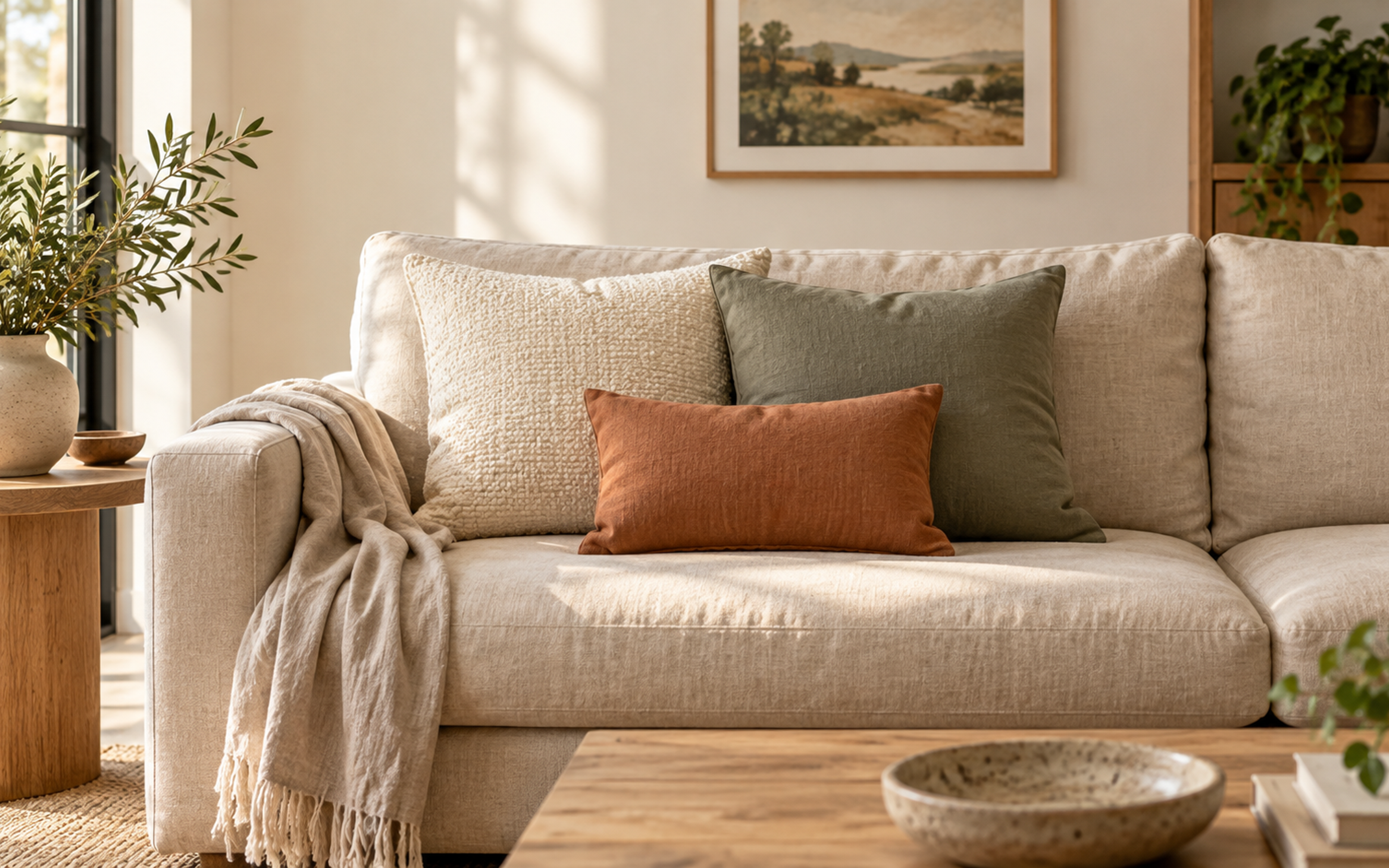
Styled inspiration · products may vary
Start a sofa pillow arrangement with the number of people who need to sit there. A pair of cushions at the ends, a small group in one corner or three carefully chosen pillows may be enough. The arrangement succeeds when it looks inviting and still leaves the sofa comfortable to use.
You do not need a matching set, an odd-number rule or a pillow for every corner. Begin with the covers and inserts already in the home, then make one change at a time.
Decide what the pillows are for
Some cushions provide support; others mainly add color or texture. Try each one in your normal sitting position. A large cushion that looks generous can reduce seat depth, particularly on a compact sofa.
Keep pillows that make the seat more comfortable where they are needed. A decorative lumbar cushion that must be moved every time may belong on an occasional chair or be stored nearby.
If the household repeatedly puts all the cushions on the floor, treat that as useful feedback. The number or size may need changing.
Arrangement 1: one pillow at each end
A pair is a simple starting point for a two-seat sofa. Try similar-sized cushions at the arms and leave the center open. They can match exactly or share a color while using different textures.
For example, cream linen at one end and a cream woven cover at the other creates a relationship without adding a new accent color. This suits a sofa that already has a patterned throw or a rug with several colors.
Sit down before adding anything else. A pair that stays in place comfortably is a complete arrangement; it does not need a middle pillow to look finished.
Arrangement 2: a relaxed group of three
Place two cushions toward one end and a single cushion toward the other, or group all three in a generous corner. Try a larger square behind a smaller shape so the edges of both remain visible.
For a warm neutral sofa, one possible combination is a cream textured square, a sage square and a smaller terracotta lumbar. The colors provide variation while the sofa remains the background.
This example is a palette to test rather than a shopping list. If you already have cream and blue covers, work with those. Repeating a color from the room can be more useful than introducing a fashionable third color.
Arrangement 3: two modest corner groups
A longer sofa may suit a small grouping at each end with the middle kept clear. Start with two pillows per group only if the seat can accommodate them.
Use related colors across the groups, but vary the shapes or texture slightly. They do not need to be exact mirror images. A cushion used for support can sit where someone actually needs it.
If four cushions make the sofa less useful, return to a pair or a three-pillow layout. The sofa's width and seat depth matter more than the number in a styling formula.
Choose sizes in relation to the sofa
Measure the cushion against the height of the back and the depth of the seat. A very tall pillow may hide a low sofa back; a thick insert may push a sitter too far forward.
Paper templates can help you compare cover sizes before ordering. Lay the templates against the back to see their visual scale, then remember that a filled cushion will project farther into the seat.
As a hypothetical test, try two 20-inch squares on a roomy sofa and compare them with smaller squares you already own. On a shallow loveseat, the smaller option may be more practical. There is no single cover size that suits every sofa.
For a future sofa purchase, our small living room sofa guide explains the difference between overall width and usable seat space.
Build a palette from the room
Look at the rug, curtains, art and any throw you plan to keep. Choose one existing color to repeat in a cushion. Let the other covers support it with a quieter color or a different texture.
For a room with several wood finishes, a simple cushion palette can give the eye a calmer area. See how to mix wood tones for ways to connect those finishes before adding more accessories.
Compare colors in the room's daylight and under its evening lamps. A cover that looks beige online may appear pink or yellow beside the sofa. Use a sample when available, and check the return conditions before ordering several covers.
Mix patterns without making every pillow compete
Begin with one pattern you enjoy, then pair it with a plain or textured cover that repeats one of its colors. If you add another pattern, compare it at a different scale.
A small stripe beside a broad block pattern can feel easier to distinguish than two similarly busy prints. This is an experiment, not a rule about which patterns are allowed together.
Photograph the whole sofa from the entrance. If a cushion attracts more attention than you want, remove it and compare. You may need one fewer object rather than a different set.
Check the insert and cover together
Follow the cover maker's insert guidance and check both measurements. A cover that is too loose may look slack, while an overfilled one may become stiff or difficult to close.
Consider the filling, care instructions and how the pillow feels against the body. A decorative shape with delicate trimming may be less useful in a seat used every day.
Keep the care label available. Removable covers help only if their cleaning requirements fit your routine. Check whether the insert also needs separate cleaning or a protective cover.
Give spare pillows a real home
A basket or cupboard can hold occasional cushions, provided it fits without blocking the room. If there is no sensible place for them when guests sit down, reduce the collection.
Store seasonal covers rather than whole filled cushions when that works for the inserts you own. Choose a clean, dry place and follow the fabric's care guidance.
There is no need to rearrange the sofa constantly. A comfortable everyday arrangement can stay the same while a single cover or throw changes with the season.
A no-buy ten-minute reset
- Remove all the cushions and sit on the bare sofa.
- Return the cushion that improves comfort most.
- Add one at the opposite end and compare the balance.
- Test a third only if it adds something useful.
- Move an existing throw so it does not cover the seat.
- Take a photo, then use the sofa for the evening.
Quick answers
Do you need an odd number of pillows?
No. A pair can look deliberate and work well on a compact sofa.
Should every pillow match?
No. Repeating a color, texture or material can connect different covers.
What is the best arrangement for a small sofa?
Start with one pillow at each end. Add more only after checking that the people who use the sofa still have comfortable sitting space.
You might also like
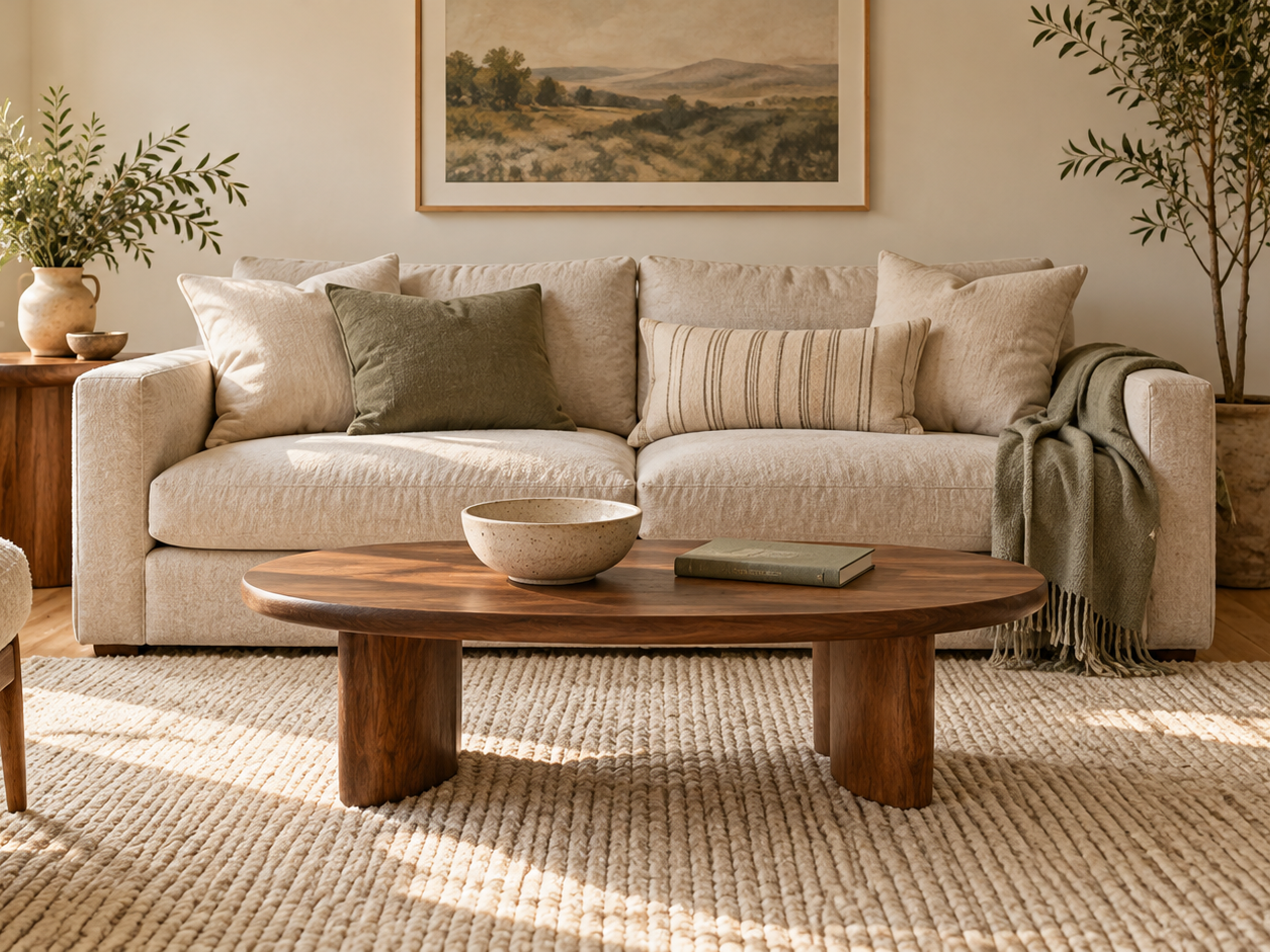
Living Room
Coffee Table Size: How to Choose the Right Length, Height and Gap
Choose a coffee table that fits your sofa and walking space. Includes a worked sizing example, shape comparisons and a practical floor test.
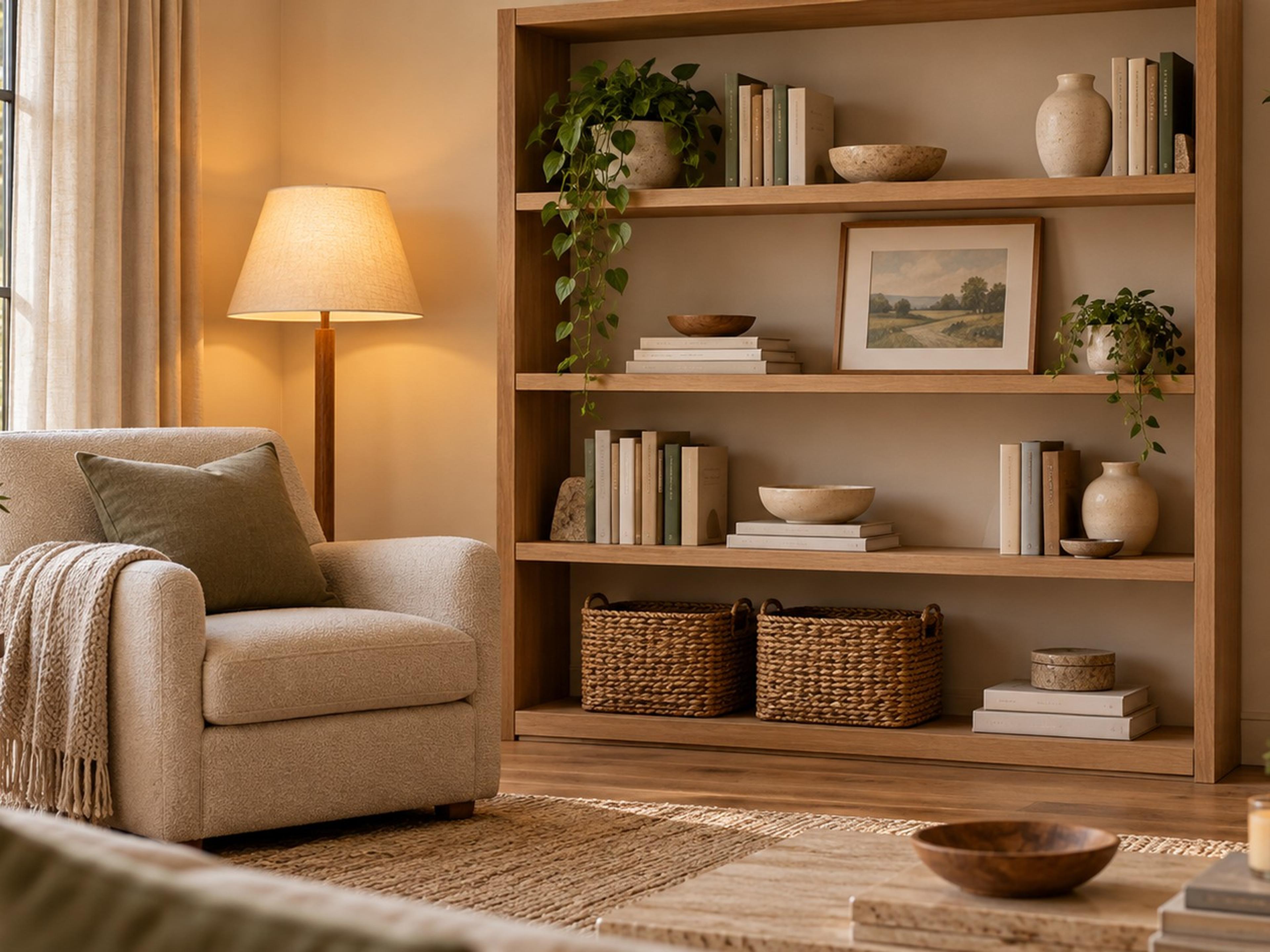
Living Room
How to Style a Bookshelf: An Easy Step-by-Step Guide
Learn how to style a bookshelf step by step: edit, start big, mix vertical and stacked books, group objects, add greenery and leave breathing room.
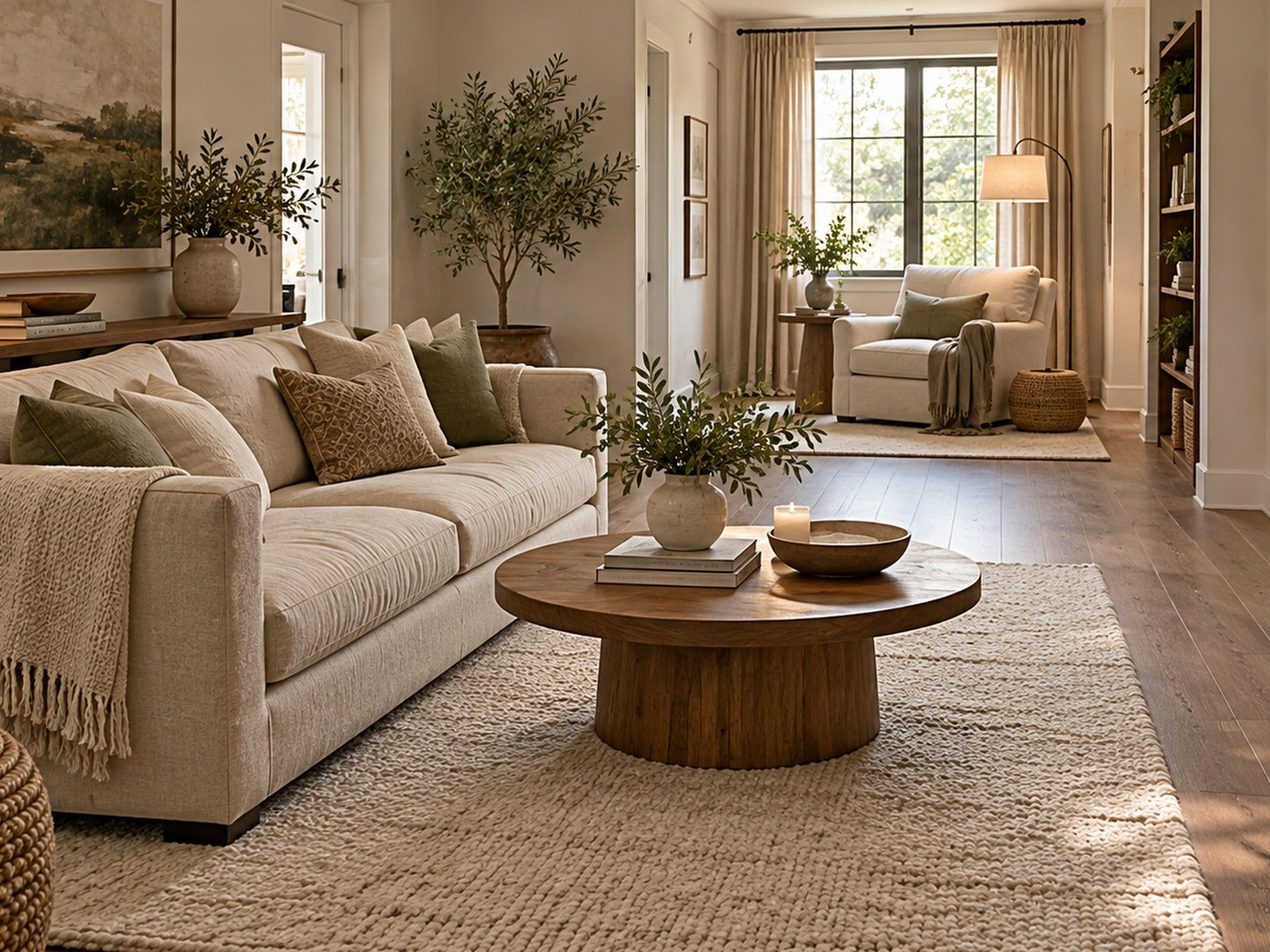
Living Room
Awkward Living Room Layout? Fixes for Narrow, Doorway-Heavy and Corner Rooms
Fix an awkward living room layout: map fixed features, plan walkways and use proven fixes for narrow rooms, corner fireplaces and too many doors.