How to Mix Wood Tones: 10 Simple Rules for a Warm, Collected Room
Make mixed wood furniture feel intentional with a daylight check, a worked oak-and-walnut example and practical fixes that start with pieces you already own.
By Shelf & Sill6 min read
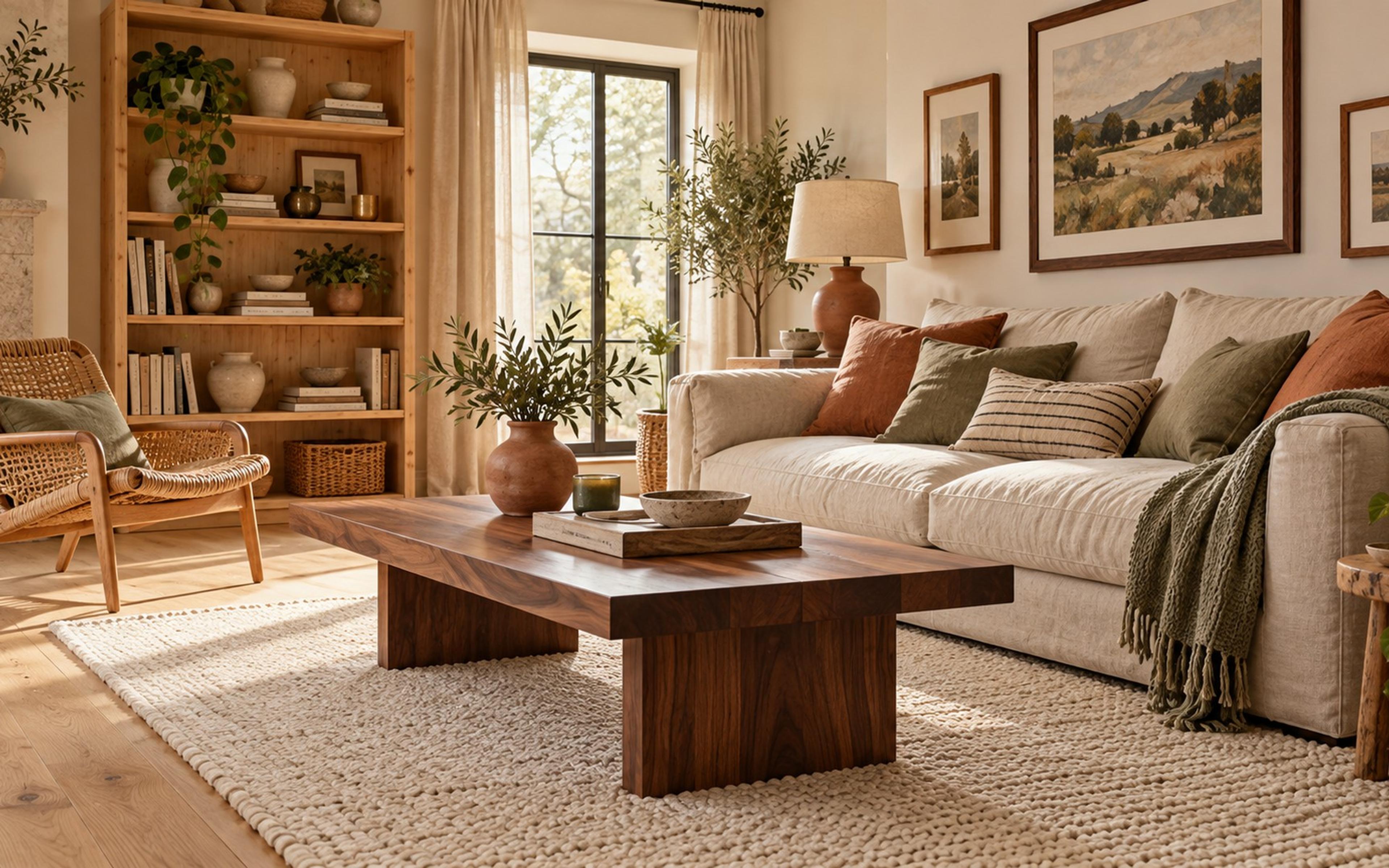
Styled inspiration · products may vary
Mixed wood furniture can make a room feel collected over time. Start with the largest wood surface you already have, notice how the other finishes look beside it, and repeat a few colors or materials around the room.
You do not need to replace useful furniture because two pieces have different names on their labels. The visible finish, grain, lighting and distance between them matter more than whether both are sold as oak or walnut.
1. Identify the wood that occupies the most space
The floor is often the strongest wood surface, followed by a large table, cabinets or a bookcase. Use that existing surface as the starting point for smaller decisions.
If the floor is not a color you would choose, there is no need to match every new piece to it. A rug can reduce its visual area, and upholstered or painted furniture can give the room another dominant material.
Take a photo of the whole room before moving anything. A close-up of two finishes can make their difference look much stronger than it feels when the pieces are several feet apart.
2. Compare undertones in your own room
Put a sample or a small movable piece beside the existing furniture in daylight. Then compare it again under the lamps you use in the evening. Look for an obvious golden, reddish, gray or relatively neutral cast.
A sheet of white paper can provide a simple comparison point, but it is not a scientific color test. Surrounding paint and changing light affect what you see. Phone cameras and retailer photographs can also shift colors.
Treat undertones as a way to understand a combination you dislike, rather than a rule that warm and cool finishes must never share a room. If a combination feels good in its actual setting, it does not need correcting to satisfy a label.
3. Use a clear difference when a near-match bothers you
Two adjacent surfaces that are almost the same can sometimes emphasize the mismatch. You might prefer a distinctly darker coffee table against a pale floor, or a painted side table beside a wood sofa frame.
This is a visual choice, rather than a requirement. Near-matching woods can also look quiet and layered. Test the pieces in place before deciding the difference is a problem.
If the issue appears only where two wood surfaces touch, try a textile between them or move the smaller piece. That is an easier experiment than refinishing a whole item.
Worked example: oak floor, walnut table and a pine bookcase
Imagine a room with a pale golden floor, a dark brown coffee table and a yellow-toned pine bookcase. The bookcase feels disconnected, but all three pieces are useful.
First, put a cream rug under the coffee table if the layout needs one. This creates a separate surface between the table and floor. Use the rug for a real purpose rather than buying it only to hide a color difference.
Next, borrow a dark frame or tray and place it across the room from the coffee table. Repeating the dark brown once can make the table feel related to the rest of the room.
Then edit the bookcase. Group its contents so some of the strong yellow area is interrupted by books, ceramics or baskets you already own. Keep enough space to use the shelves.
Finally, photograph the room again from the same spot. If the bookcase still dominates, try a different position before considering paint. The goal is a room you enjoy, not an exact ratio of three woods.
4. Repeat a finish without buying a set
A small frame, bowl, stool or tray can echo a larger piece. Look around your home first. Repetition works best when it is distributed across the room rather than collected in one corner.
You do not have to repeat every finish exactly twice. One distinctive antique or handmade piece can stand alone. Repetition is a useful option when something feels isolated, rather than a compulsory decorating formula.
Avoid buying several accessories only to make a new table fit. Include those purchases in the true cost when comparing furniture options.
5. Notice grain and sheen as well as color
A glossy finish reflects more light than a matte one, so similar colors can behave differently in the same room. Strong grain can also attract attention even when the wood's color is quite subtle.
Let one particularly expressive surface have room around it. Plain upholstery, a simple rug or quiet ceramics can balance it without trying to imitate the grain elsewhere.
Rattan and cane can bring useful texture, but they are not interchangeable with wood species or guaranteed to match any finish. Compare their actual color in the room too.
6. Use non-wood materials as breathing space
Upholstery, painted furniture, metal and glass can break up a room that feels dominated by wood. A fabric ottoman might work better than adding another wood coffee table; a painted bedside piece can soften a room with a wood bed and floor.
Start by redistributing existing textiles. A runner on a sideboard or a cushion on a wood bench may be enough to change how adjacent finishes relate.
When a rug would help the seating arrangement, check our living room rug size guide before choosing one. Its footprint matters more than whether the pattern perfectly repeats a wood color.
7. Balance light and dark across the room
If every dark piece sits on one wall, that side can feel visually heavier. Moving a small dark object or swapping two side tables may distribute the contrast more comfortably.
You do not need symmetrical pairs. A bookcase on one side might be balanced by art or a lamp on the other. Compare the room from the doorway and from your usual seat, since the view changes the effect.
Keep circulation and access ahead of color balance. A table in the walking route is not improved by being the right shade.
8. Try combinations as starting points
- Pale wood with dark brown: useful when you want distinct contrast.
- Golden wood with cream upholstery: a soft starting point for a warm room.
- Dark furniture with a light rug: helps the furniture's outline stand out.
- Mixed wood with a painted piece: reduces the number of adjacent wood surfaces.
These are options to test, not guaranteed pairings. Stain and finish can make two pieces of the same species look quite different.
9. Fix the smallest part of the problem first
Remove an accessory, change a textile, move a small table, or test a finish sample before replacing furniture. Make one change at a time so you can see what helped.
If you consider painting or refinishing, identify the material and finish first. Solid wood, veneer and laminate need different preparation. Ask for advice when you cannot identify the surface; sanding an unknown thin veneer is not a harmless styling experiment.
10. Buy from samples rather than color names
When possible, compare a physical sample in your room. Check it beside the floor, near the other furniture and under evening lighting. “Natural,” “oak effect” and “walnut finish” describe broad families rather than standardized colors.
Also check dimensions, function and care. A finish you love is only one part of whether a piece belongs in the room.
Quick answers
How many wood tones are allowed?
There is no fixed limit. Starting with two or three visible finishes can simplify decisions, but an existing room can work with more.
Must the furniture match the floor?
No. Contrast can be attractive. Compare the whole room before assuming a different finish needs replacing.
What is the cheapest way to make mixed woods feel related?
Try moving existing pieces and repeating a color with an object you already own. Spend only after the arrangement shows what is actually missing.
You might also like
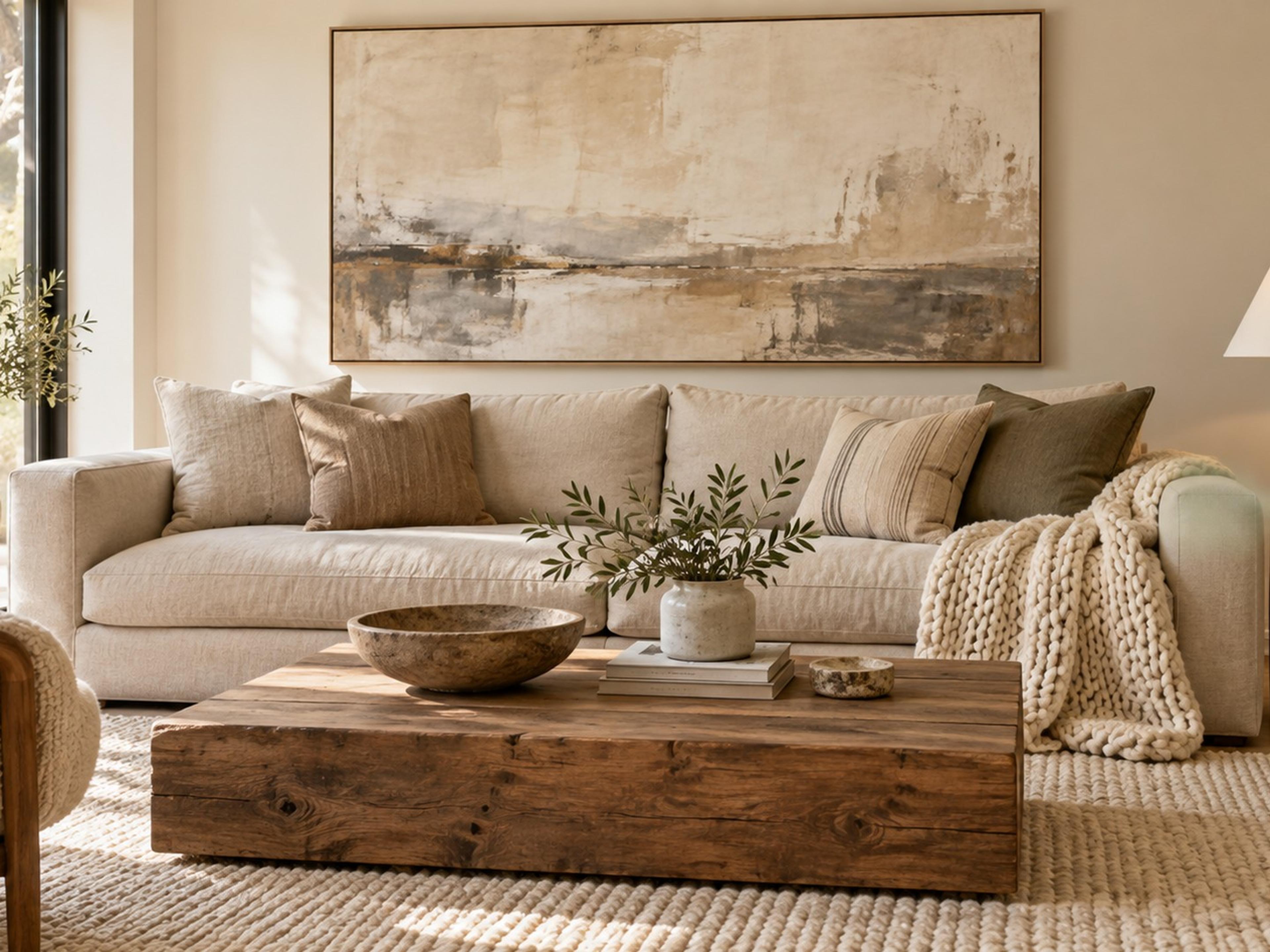
Living Room
How High to Hang Art Above a Couch (Simple Guidelines That Work)
How high to hang art above a couch: the 8 to 10 inch gap, the eye-level center rule, how wide art should be, and fixes for low sofas and tall ceilings.
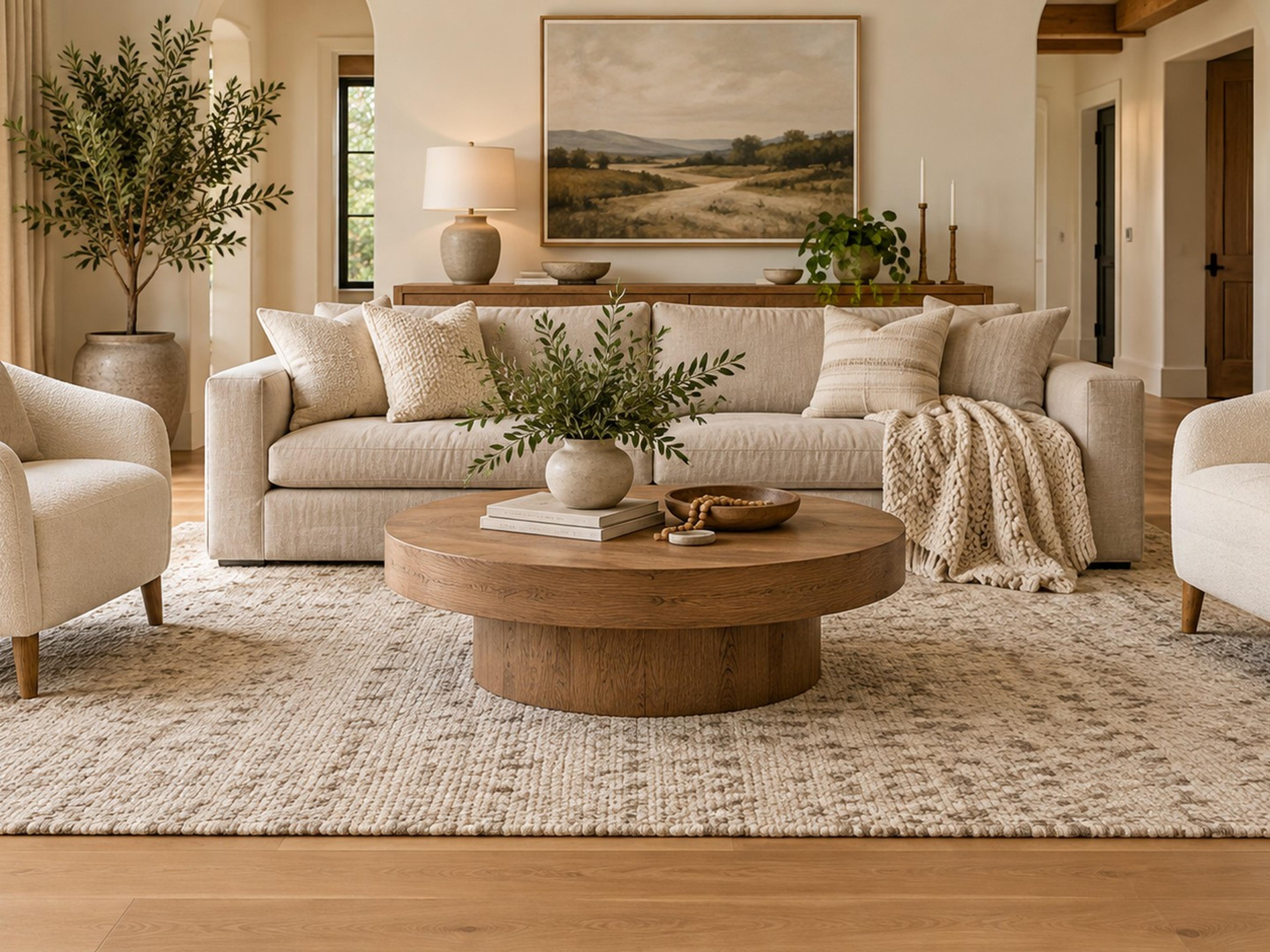
Living Room
Living Room Rug Size: How to Choose the Right Rug for Your Layout
Choose a living room rug by measuring your seating, testing furniture placement and comparing sizes. Includes an 84-inch-sofa example and a buying checklist.
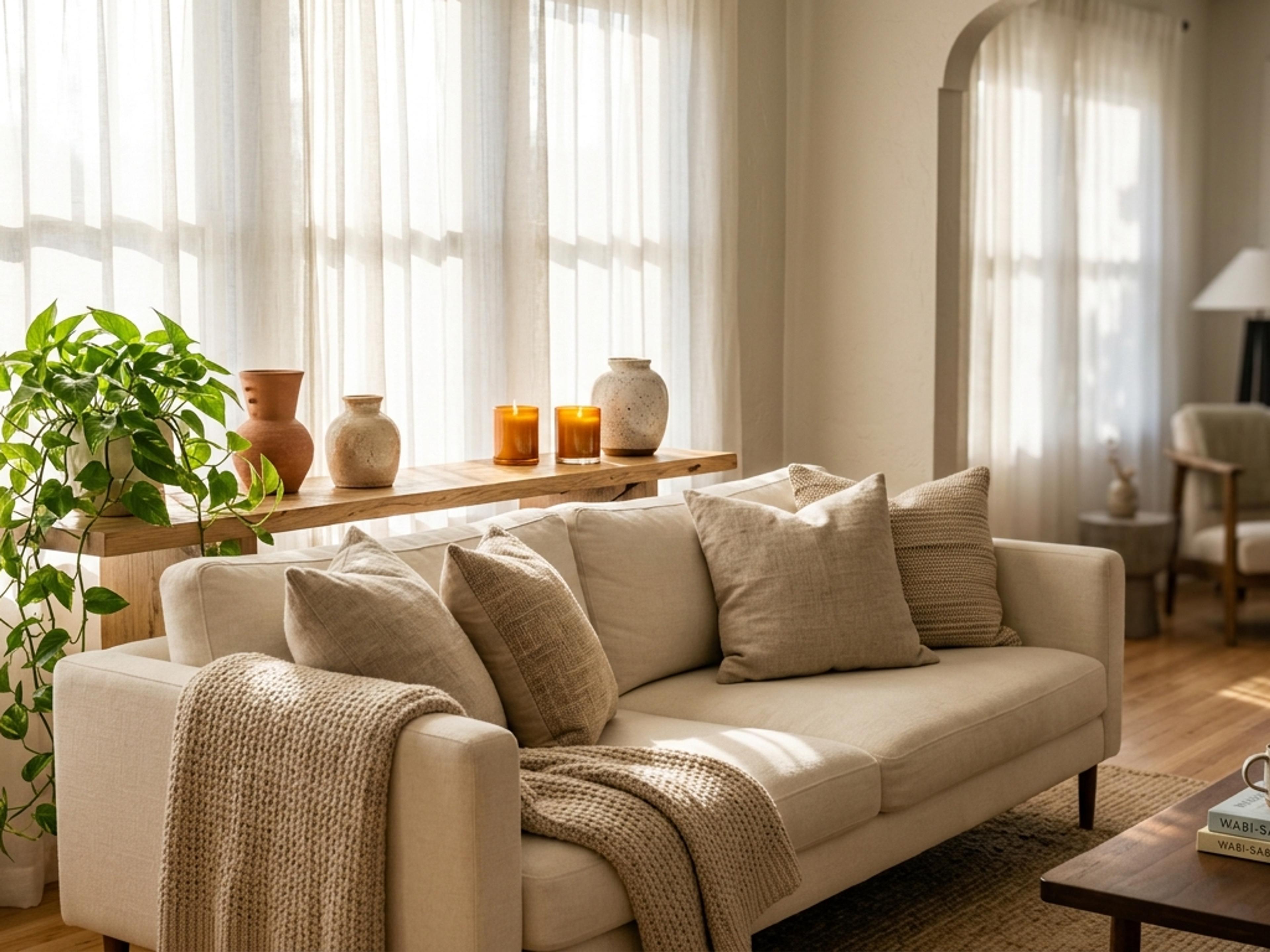
Living Room
5 Simple Ways to Make Your Living Room Feel Cozy
Transform your living room into a warm, inviting sanctuary with these 5 simple styling tricks and cozy accent pieces.