How to Style a Bookshelf: An Easy Step-by-Step Guide
Learn how to style a bookshelf step by step: edit, start big, mix vertical and stacked books, group objects, add greenery and leave breathing room.
By Shelf & Sill5 min read
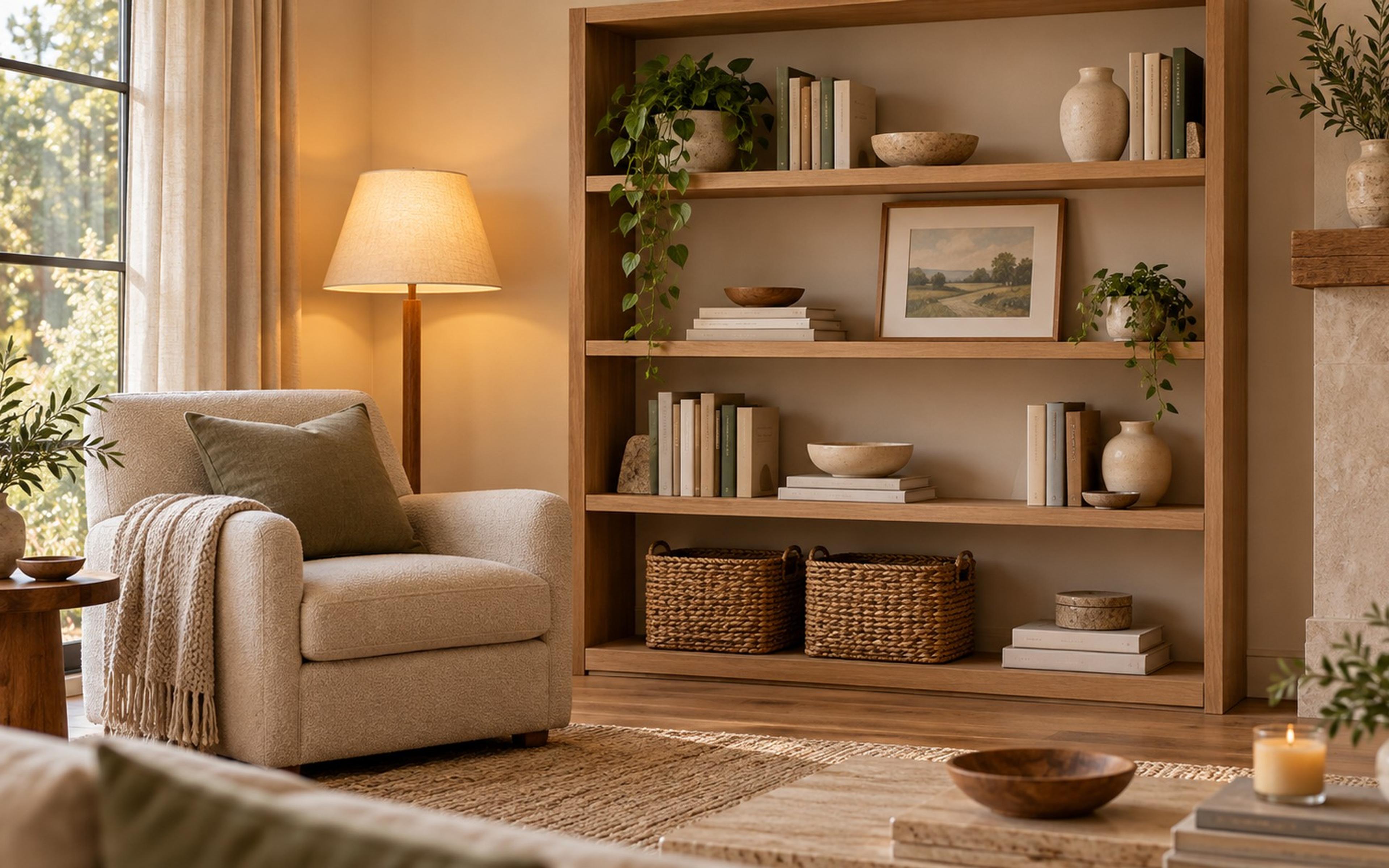
Styled inspiration · products may vary
A bookshelf can be the most personal spot in a living room, or the most chaotic. Rows of books, random souvenirs, stacks of paperwork and a plant that didn't make it: it happens to everyone. Learning how to style a bookshelf is mostly about editing, grouping and leaving some space to breathe. You don't need new decor, just a plan.
This guide walks through a simple step-by-step method, plus ideas for open shelves, built-ins and renter-friendly bookcases.
Step 1: Empty It Completely
What: Take everything off the shelves and dust them.
Why it works: Starting with a blank slate lets you see the shelf as a whole and choose only what belongs there.
When it may not work: Very large built-ins are a big job to empty. Work one section at a time instead.
Step 2: Sort What You Have
What: Group items into books, decorative objects, baskets and boxes, plants, and art or frames.
Why it works: Sorting shows you what you have too much of and what is missing.
When it may not work: If you have a large book collection, the shelf may need to be mostly books. That's fine; you can still style it.
Step 3: Start With the Largest Pieces
What: Place your biggest items first: large baskets on low shelves, a tall vase, a big framed print leaning at the back.
Why it works: Big pieces anchor the shelf. Starting with them prevents a scattered look from too many small things.
When it may not work: Very deep shelves may swallow large pieces. Bring them forward, or layer a framed print behind.
Step 4: Add Books Three Ways
What: Arrange books vertically in rows, horizontally in stacks, and as a base for objects.
Why it works: Mixing directions breaks up the visual rhythm and gives you spots to place decor.
When it may not work: Collectors who want spines in order may prefer all-vertical rows. Use stacks only at the ends as bookends.
Ways to arrange books
- By color for a soft, gradient look
- By size for a tidy, tailored look
- Spines in for a neutral look (less practical if you read often)
- A mix of vertical rows and short horizontal stacks
When it may not work: Spines-in and color-sorted shelves make it harder to find a book. Choose the method you can live with.
Step 5: Layer in Decorative Objects
What: Add a few objects with varied shapes and heights: ceramics, candleholders, a small sculpture, a wood bowl.
Why it works: Objects break up rows of books and add personality. Odd-numbered groupings, like threes, are a common styling guideline because they look natural.
When it may not work: Too many small objects make shelves look cluttered. Choose fewer, larger pieces.
Step 6: Add Greenery
What: Add a trailing plant on a high shelf, a small potted plant at eye level, or dried stems in a vase.
Why it works: Plants soften hard lines and bring life to the shelf.
When it may not work: Bookshelves away from windows may be too dark for live plants. Dried stems or quality faux plants work there. If you have pets, check the ASPCA's toxic and non-toxic plant list before adding any plant.
Step 7: Hide the Clutter
What: Use baskets, lidded boxes or magazine files on lower shelves for things you don't want on display.
Why it works: Closed storage keeps the shelf useful without looking messy.
When it may not work: Too many baskets look heavy. Use them mainly on the bottom shelves.
Step 8: Leave Breathing Room
What: Leave some empty space on each shelf.
Why it works: Negative space lets each grouping stand out and makes the shelf look calm.
When it may not work: If you have more books than space, you may not have much room to spare. Keep at least a little space on the top and middle shelves.
Step 9: Zigzag the Visual Weight
What: Place heavier or darker items in a zigzag pattern across the shelves rather than lining them up in a column.
Why it works: It balances the shelf and moves the eye around.
When it may not work: On very narrow shelves, a zigzag isn't as noticeable. Focus on alternating stacks and rows instead.
Step 10: Repeat Colors and Materials
What: Choose two or three colors or materials and repeat them across shelves: cream ceramics, warm wood and brass, for example.
Why it works: Repetition makes the shelf feel cohesive.
When it may not work: Too much matching can feel staged. Mix in one or two personal items that break the pattern.
Step 11: Add Light and Art
What: Lean a small framed print at the back of a shelf, or add a small battery-powered or plug-in lamp to a wide shelf.
Why it works: Art adds a focal point to a shelf, and a warm glow makes the bookcase feel cozy in the evening.
When it may not work: Lamps need cords managed, and heat-producing bulbs shouldn't sit near paper. Choose cool-running LED options and keep them clear of books.
Styling Different Types of Shelves
Open bookcases
Treat each shelf as a small vignette. Keep the top shelf lighter and the bottom heavier.
Built-ins
Use the symmetry of built-ins by mirroring groupings on each side. Add lighting if it's already installed.
Floating shelves
Keep them light, especially where they're not secured into studs, and stay within the shelf's stated weight limit.
Cube shelves
Mix baskets in some cubes with books or objects in others in a checkerboard pattern.
Safety Tips
- Anchor tall bookcases to the wall to prevent tipping, especially in homes with kids or pets. The CPSC recommends anchoring furniture with shelves; follow the anti-tip kit's instructions.
- Keep heavy books on lower shelves.
- Don't overload shelves beyond what they can hold.
Renter-Friendly Tips
- Ask your landlord about anchoring tall bookcases, since tip-over safety matters.
- Use freestanding, low bookcases where anchoring isn't possible.
- Lean art on shelves instead of hanging it above.
Common Mistakes to Avoid
- Filling every inch of every shelf
- Using lots of tiny objects
- Lining up items in straight columns
- Skipping anchors on tall bookcases
- Forgetting to edit seasonally
FAQ
How do you style a bookshelf without it looking cluttered?
Edit to fewer items, mix vertical and horizontal books, group objects in odd numbers and leave empty space.
Should books be vertical or horizontal on a shelf?
Both. Mixing them breaks up rows and gives you space for decor.
What should I put on my bookshelf besides books?
Ceramics, plants, framed art, candleholders, baskets and a few personal pieces.
How do you style a bookshelf with lots of books?
Keep most books vertical, add a few horizontal stacks with an object on top and leave a little breathing room on each shelf.
A well-styled bookshelf feels personal, calm and lived-in. Edit, group, repeat and leave room to breathe. For more ways to make the room feel warm, see 5 simple ways to make your living room feel cozy.
You might also like
Living Room
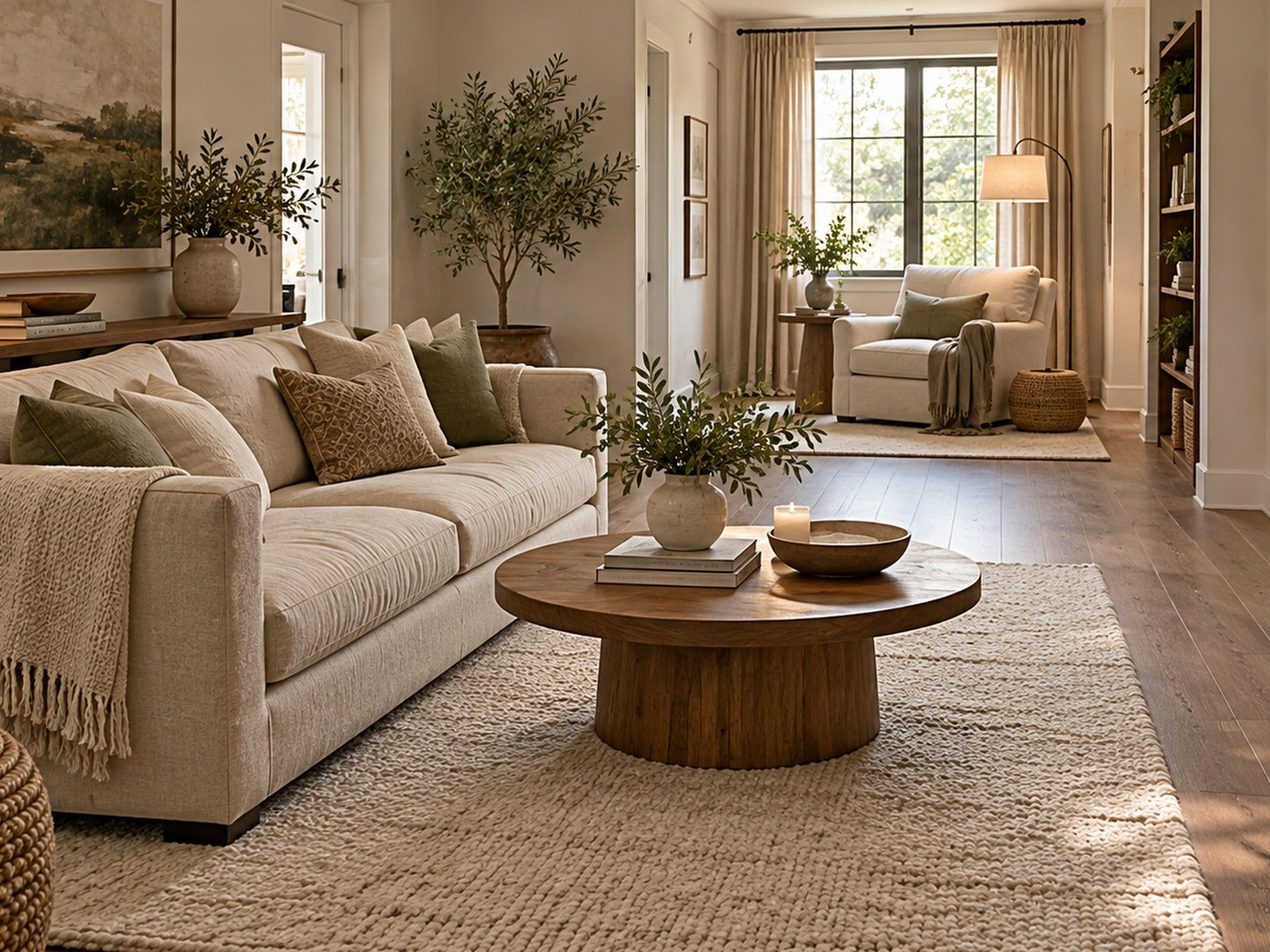
Awkward Living Room Layout? Fixes for Narrow, Doorway-Heavy and Corner Rooms
Fix an awkward living room layout: map fixed features, plan walkways and use proven fixes for narrow rooms, corner fireplaces and too many doors.
Living Room
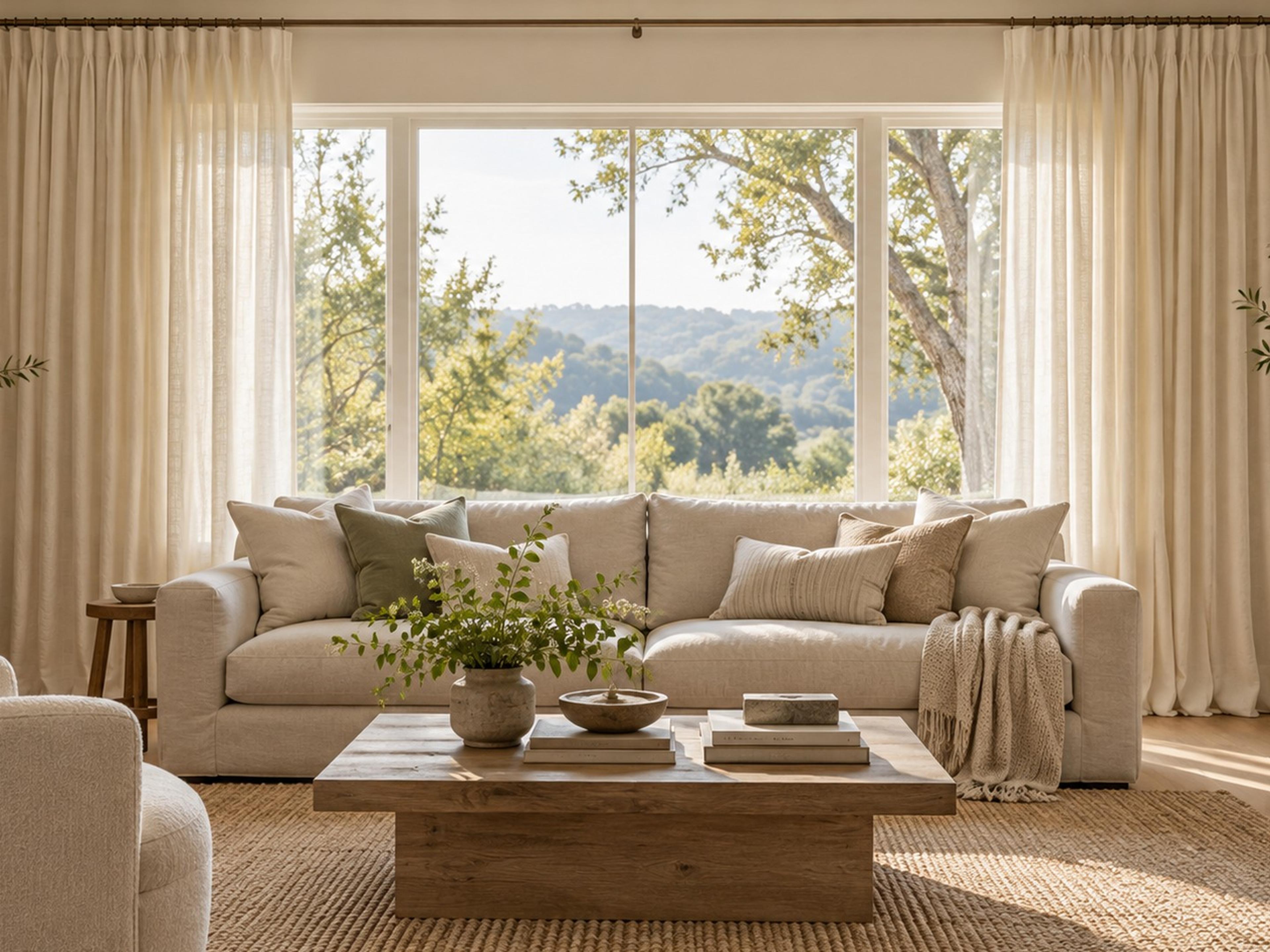
How High to Hang Curtains: Rod Height, Width and Length Made Simple
Plan curtain height, rod width and panel length with a worked window example, fabric-width calculations and practical checks before drilling.
Living Room
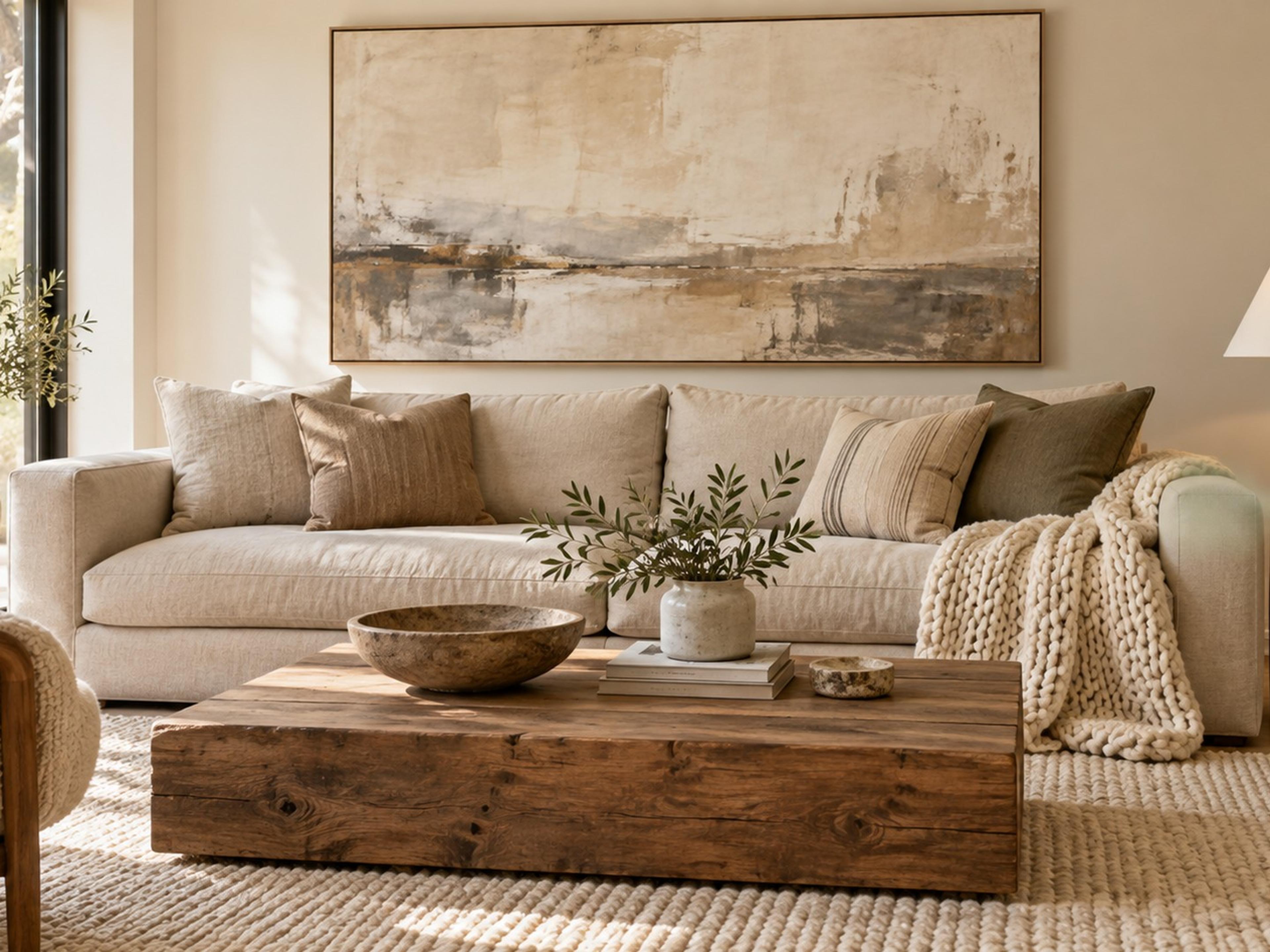
How High to Hang Art Above a Couch (Simple Guidelines That Work)
How high to hang art above a couch: the 8 to 10 inch gap, the eye-level center rule, how wide art should be, and fixes for low sofas and tall ceilings.