Rug Under a Dining Table: Size, Shape and Material Guide
Choose the right rug under a dining table: size for pulled-out chairs, match the table shape, pick practical materials and forgiving patterns.
By Shelf & Sill5 min read
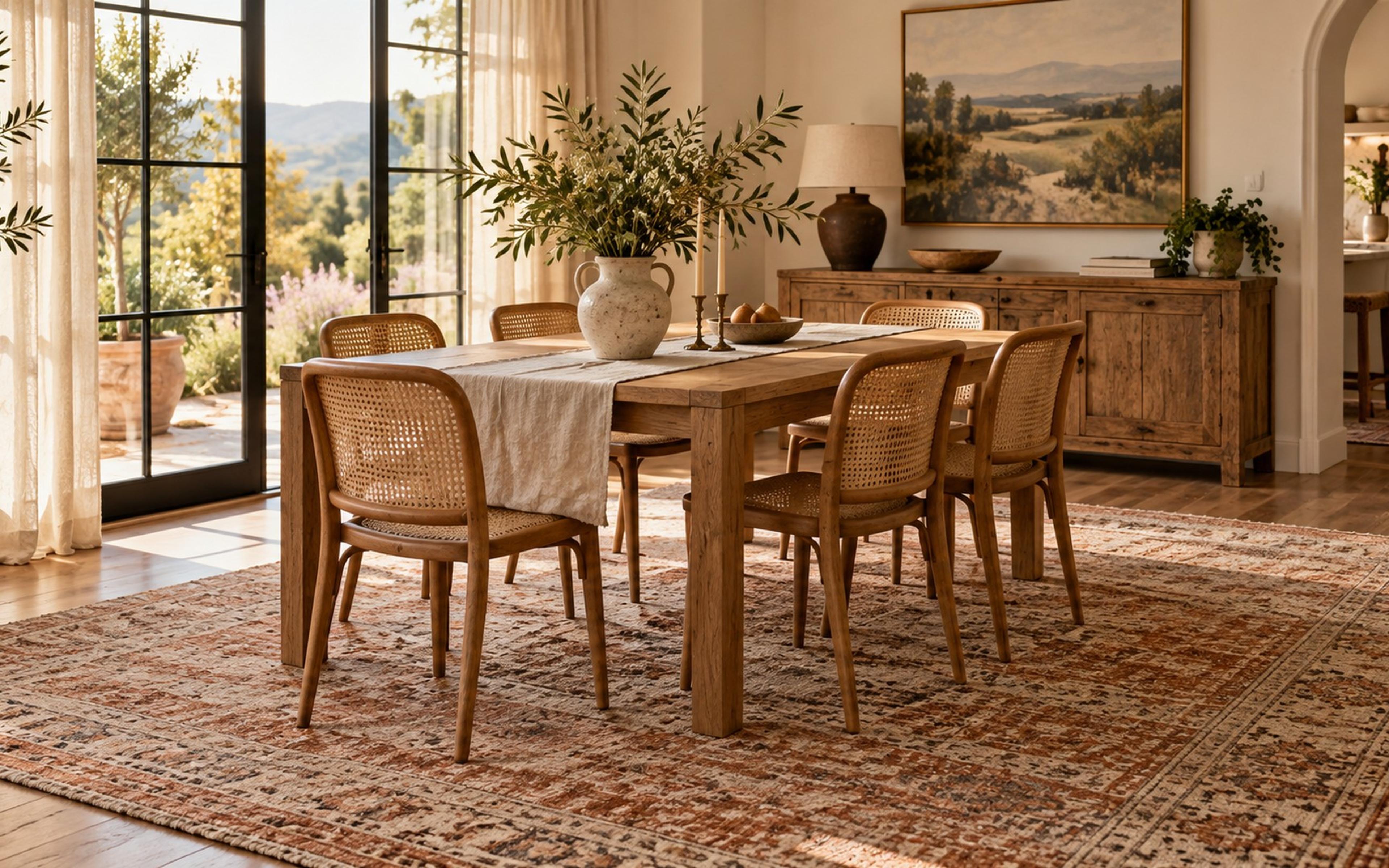
Styled inspiration · products may vary
A rug under a dining table can ground the space, add warmth and define the dining area in an open-plan room. But it is also the one rug that has to survive crumbs, spills and chairs scraping back and forth every day. Getting the size, material and placement right makes the difference between a rug you love and one you fight with.
This guide covers how big a rug under a dining table should be, which shapes and materials work best, and when to skip the rug entirely.
The Size Guideline
What: Choose a rug that extends at least about 24 inches beyond the edge of the table on all sides; some designers suggest up to about 36 inches.
Why it works: That extra space lets chairs stay on the rug when someone pulls them out to sit down. If the back legs fall off the edge, the chair wobbles and catches every time.
When it may not work: In small dining areas, a rug that big may run into walls or walkways. In that case, consider skipping the rug or choosing a smaller round rug under a small table, accepting that chairs may slide off.
How to measure
1. Measure your table's length and width.
2. Add about 24 to 36 inches to each side (so 48 to 72 inches to each dimension).
3. Compare with standard rug sizes and round up.
As a rough guide, some designers suggest an 8x10 rug for a table around 74 inches long and a 9x12 for one around 98 inches long; always check your own table and chairs.
Match the Rug Shape to the Table
What: Use a rectangular rug for rectangular tables and a round rug for round tables.
Why it works: Matching shapes look balanced and give even space on all sides.
When it may not work: A square table in a long room may suit a rectangular rug better. Oval tables can use either rectangular or oval rugs.
Choose the Right Material
Flatweave
What: Low, tightly woven rugs without pile.
Why it works: Chairs glide easily and crumbs sweep up quickly. Many guides recommend flatweave as the most practical dining rug.
When it may not work: Some flatweaves can slide. Use a rug pad.
Low-pile
What: Short, dense pile.
Why it works: Softer than flatweave and still easy to clean.
When it may not work: Pile can trap crumbs. Vacuum often.
Natural fibers
What: Jute, sisal and similar fibers.
Why it works: Texture and warmth that suit a cozy, neutral room.
When it may not work: Natural fibers can be hard to clean after spills, and liquid left on jute can leave stains. They can also feel rough.
Washable rugs
What: Machine-washable rugs.
Why it works: Great for families, pets and frequent entertainers.
When it may not work: Large sizes may not fit home washing machines. Check the care instructions.
Avoid: shag and very thick pile under dining tables. Chairs catch and crumbs disappear into them.
Choose a Forgiving Pattern
What: Choose rugs with subtle patterns, mottled textures or vintage-style faded designs.
Why it works: Patterns hide small stains and crumbs better than solid light colors.
When it may not work: Very busy patterns can compete with a patterned tablecloth or dishes. Keep the rest of the table simple.
Color Ideas for a Warm Dining Area
- Oat and cream with a faded pattern
- Rust and terracotta tones for warmth
- Soft sage for a calm, fresh look
Rug Pads and Chairs
- Use a rug pad to stop sliding and add cushion.
- Add felt pads to chair legs to protect the rug and floor.
When it may not work: Some pads, especially rubber or latex ones, can discolor certain floors such as some vinyl and finished hardwood. Check your floor care guidance.
Rugs in Open-Plan Dining Areas
What: Use the dining rug to define the dining zone, separate from the living room rug.
Why it works: In open-plan spaces, rugs mark where each area begins and ends.
When it may not work: Two rugs too close together can look cluttered. Leave a gap of floor between them and keep colors related. For more on combined spaces, see our small living and dining room combo guide.
Extendable Tables and Benches
What: Size the rug for the table at its most-used length, and check bench placement.
Why it works: If you extend the table only for holidays, sizing for the everyday length keeps the rug in proportion most of the year. Benches slide straight back, so they need slightly less extra rug than chairs.
When it may not work: If you extend the table often, size for the full length so chairs stay on the rug when guests come.
Caring for a Dining Rug
What: Vacuum often, blot spills right away and rotate the rug every few months.
Why it works: Crumbs ground into fibers wear a rug down faster, and rotating spreads out the wear from chairs moving in the same spots.
When it may not work: Some materials need special cleaning. Follow the care label, and test any cleaner on a hidden corner first.
Layering a Dining Rug
What: Place a smaller vintage-style rug over a larger flat base rug.
Why it works: You get the right overall size for chairs from the base, with the color and pattern of a rug you love on top.
When it may not work: Chair legs can catch on the edge of the top rug. Make sure all chairs sit fully on the base, and keep the top rug thin.
When to Skip the Dining Rug
- Small dining nooks where a big enough rug won't fit
- Homes with young kids and frequent spills (unless washable)
- Under kitchen tables close to cooking areas
When it may not work: If you love the look but worry about spills, try an outdoor-style rug or a washable one.
Common Mistakes to Avoid
- A rug too small for chairs to pull out
- Shag or thick pile under a table
- Light solid colors that show every spill
- Skipping a rug pad
- A rug shape that doesn't match the table
FAQ
How big should a rug be under a dining table?
At least about 24 inches beyond the table on all sides so chairs stay on the rug when pulled out.
Should you put a rug under a dining table?
It can add warmth and define the area, but it isn't necessary. Skip it in small spaces or where spills are common, unless the rug is washable.
What type of rug is best under a dining table?
Flatweave, low-pile or washable rugs are usually most practical.
Can you use a round rug under a rectangular table?
It usually looks better to match shapes. A round rug under a long rectangular table often leaves chairs off the edge.
The right rug under a dining table adds warmth without becoming a chore. Size it for pulled-out chairs, choose a practical material and pick a forgiving pattern. For more cozy table ideas, see cozy Thanksgiving table ideas.
You might also like

Kitchen & Dining
How to Style Open Kitchen Shelves (So They Look Good and Stay Useful)
Style open kitchen shelves with dishes you actually use. Includes a two-shelf example, a no-buy styling plan, jar storage checks and an easy reset routine.
Kitchen & Dining
Small Living Dining Room Combo: Layout and Zoning Ideas That Work
Plan a small living dining room around real chair clearance and daily routes. Includes a table-size calculation, three layout options and a practical floor test.
Kitchen & Dining
Pendant Height Over a Dining Table: How High to Hang It
Get the pendant height over a dining table right: the 30 to 36 inch guideline, adjustments for tall ceilings, sizing, spacing and renter options.