Rug Size Under a Bed: A Simple Guide for Every Bed Size
Find the right rug size under a bed for twin, full, queen and king. Compare placement styles, runners and layering for a warm, finished bedroom.
By Shelf & Sill6 min read
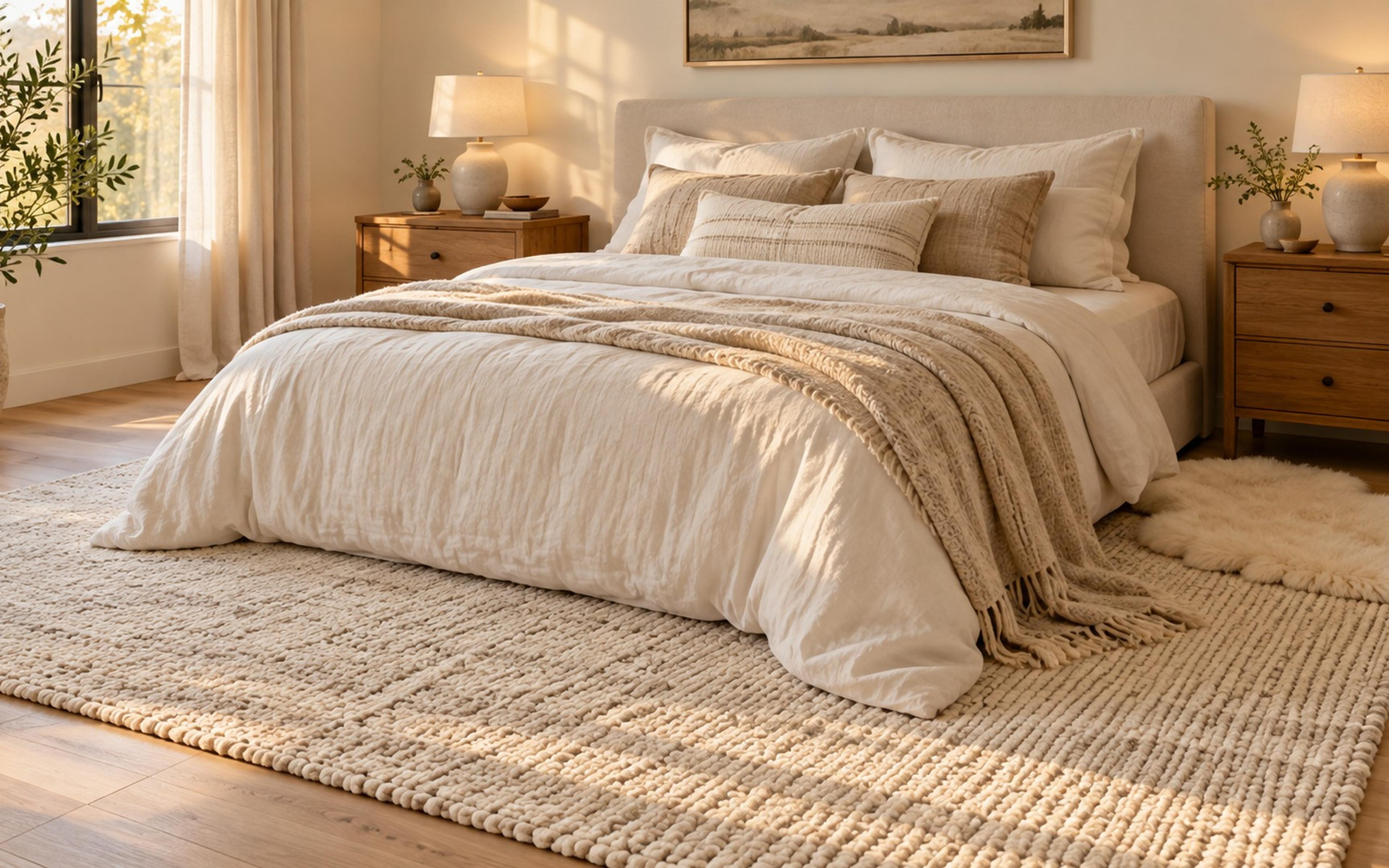
Styled inspiration · products may vary
A rug under the bed is one of the easiest ways to make a bedroom feel warm and finished. It softens the first step in the morning, adds color and texture, and visually anchors the bed. But the wrong rug size under a bed can make the room look choppy or the bed look like it is floating on a postage stamp.
This guide walks through rug sizes for twin, full, queen and king beds, the main placement styles, and when runners or layered rugs are a better choice. If you are still deciding where the bed goes, start with our small bedroom layout with a queen bed guide, then size the rug once the bed has a home.
All sizes below are common guidelines, not rules. Your room, frame and furniture matter more than any chart, so measure before you buy.
Start With What You Want the Rug to Do
What: Decide whether the rug is mainly for comfort underfoot, for anchoring the bed, or for adding color.
Why it works: A comfort rug only needs to reach where your feet land. An anchoring rug needs to extend around the bed. Knowing the job keeps you from overbuying or underbuying.
When it may not work: Some rooms need all three. In that case, the larger anchoring size usually solves the comfort problem too.
The Three Main Placement Styles
1. Full rug under the bed and nightstands
The rug sits under the whole bed and both nightstands, extending past the sides and foot.
Why it works: It looks generous and grounded, and every step out of bed lands on the rug.
When it may not work: It needs the largest rug and a room big enough to leave a border of bare floor around the edges. In a small room, it can look wall-to-wall.
2. Lower two-thirds of the bed
The rug starts a little in front of the nightstands and runs past the foot of the bed. Nightstands stay on the floor.
Why it works: It is the most common choice because it gives soft landing spots on both sides with a smaller, easier-to-fit rug.
When it may not work: If the rug is too short, only a sliver shows at the sides. Check how much will peek out before you buy.
3. Runners on the sides or at the foot
Two runners flank the bed, or one runner sits across the foot.
Why it works: Runners fit narrow rooms, beds pushed against a wall, and spaces where a large rug would block a door.
When it may not work: Runners can slide on hard floors and look busy if they don't match. A rug pad and matching pair help.
Rug Size Under a Bed: A Guide by Bed Size
A widely used rule of thumb is to let the rug extend roughly 18 to 24 inches beyond each side of the bed in larger rooms, and somewhat less in tight ones. Use that as your starting point.
Twin bed
Twin beds are narrow, so smaller rugs go a long way.
- Common choices: a small rug laid beside the bed, or a medium rug laid under the lower part of the bed.
- Kids' rooms and shared rooms: one larger rug between two twin beds can tie the room together.
When it may not work: If a twin is pushed against a wall, a rug under the bed is mostly hidden. A rug beside the open side does more.
Full bed
- Common choices: a medium rug under the lower two-thirds, or a larger rug for a full-under look in a bigger room (a 6x9 ft rug is a common pick, with 8x10 ft for the full-under look).
When it may not work: A rug that matches the mattress width won't show at the sides. Go wider than the bed or switch to runners.
Queen bed
The most common bed size and the one with the most options.
- Common choices: a larger rug for the lower two-thirds or full-under placement (often 8x10 ft), or a mid-size rug laid sideways in a smaller room (often 5x8 or 6x9 ft).
- Small rooms: runners on each side may fit better than one big rug.
When it may not work: In a tight room, a large rug can run into dresser legs and closet doors. Leave a border of floor if you can.
King and California king
- Common choices: the largest standard sizes, placed under the lower two-thirds or the whole bed (often 9x12 ft; an 8x10 ft can work under the lower part of the bed in a tighter room).
When it may not work: Large rugs are heavy and harder to clean. In a modest room, two wide runners may be easier to live with.
Horizontal or Vertical?
What: Most rectangular rugs under a bed are laid horizontally, with the long side running across the bed.
Why it works: This gives the most rug on both sides, where you step.
When it may not work: In long, narrow rooms, or when a bed sits close to a wall, a vertical rug or a runner may fit the floor better.
How Far Should the Rug Extend at the Foot?
What: Let the rug run past the foot of the bed, with enough room to stand there or place a bench.
Why it works: It finishes the look and makes the end of the bed feel cozy.
When it may not work: If a dresser sits close to the foot of the bed, a rug that runs under the dresser's front legs only can make it wobble. Either fit the rug fully under the dresser or stop it short.
Layering Rugs Under a Bed
Layering is a smart way to get a large look without one huge rug.
What: Lay a large, flat, budget-friendly base rug (natural fiber or a simple flatweave), then top it with a smaller, softer or patterned rug.
Why it works: You get size and texture, and the softer rug can be swapped seasonally.
When it may not work: Two thick rugs can become a trip hazard and make doors catch. Keep the base flat and use a rug pad.
Ideas that suit a warm, neutral bedroom:
- Natural fiber base with a cream or oat wool-look rug on top
- Flatweave base with a vintage-style faded rug angled slightly
- Neutral base with a small sheepskin-style rug beside the bed
Choosing Material and Pile
- Low pile and flatweave: easier to clean, good under the legs of a bed so it doesn't wobble.
- Plush or shag: soft underfoot, best for the area beside the bed.
- Natural fibers: add texture but can feel rough to bare feet.
When it may not work: Very high-pile rugs under bed legs may make the bed feel unstable. Check for wobble after placing it.
Rug Safety and Grip
Use a rug pad, especially for runners and smaller rugs, to reduce sliding. Tape down curling corners. Keep rug edges clear of door swings.
When it may not work: Some rug pads and adhesives can discolor certain floors, such as some vinyl and finished hardwood. Check the floor care guidance before using one, especially as a renter.
Common Mistakes to Avoid
- A rug that is only as wide as the mattress
- A rug that stops under the dresser's front legs
- Runners that don't match or slide around
- Plush rugs under bed legs that cause wobbling
- Skipping a rug pad on hard floors
FAQ
What size rug goes under a queen bed?
Many people choose a larger rug for the lower two-thirds placement (often 8x10 ft), or a mid-size rug laid sideways in a smaller room. Measure the room first.
Should a rug go under nightstands?
It can. If the rug is big enough to reach under both nightstands fully, it looks generous. If it would only catch their front legs, stop the rug in front of them instead.
Is it okay to use a runner instead of a rug under the bed?
Yes. Runners suit narrow rooms and beds against a wall. Use one on each side for symmetry, or one across the foot.
Can I put a round rug under a bed?
Round rugs are usually better beside the bed or in a reading corner than under it, since the bed is rectangular. A large round rug can work under a small bed in a playful kids' room.
The right rug makes a bedroom feel warm from the very first step. Choose the job, size it to your bed and room, and let a soft neutral rug pull the whole space together. For more ways to layer warmth and texture, see 5 simple ways to make your living room feel cozy; the ideas translate easily to a bedroom.
You might also like
Bedroom
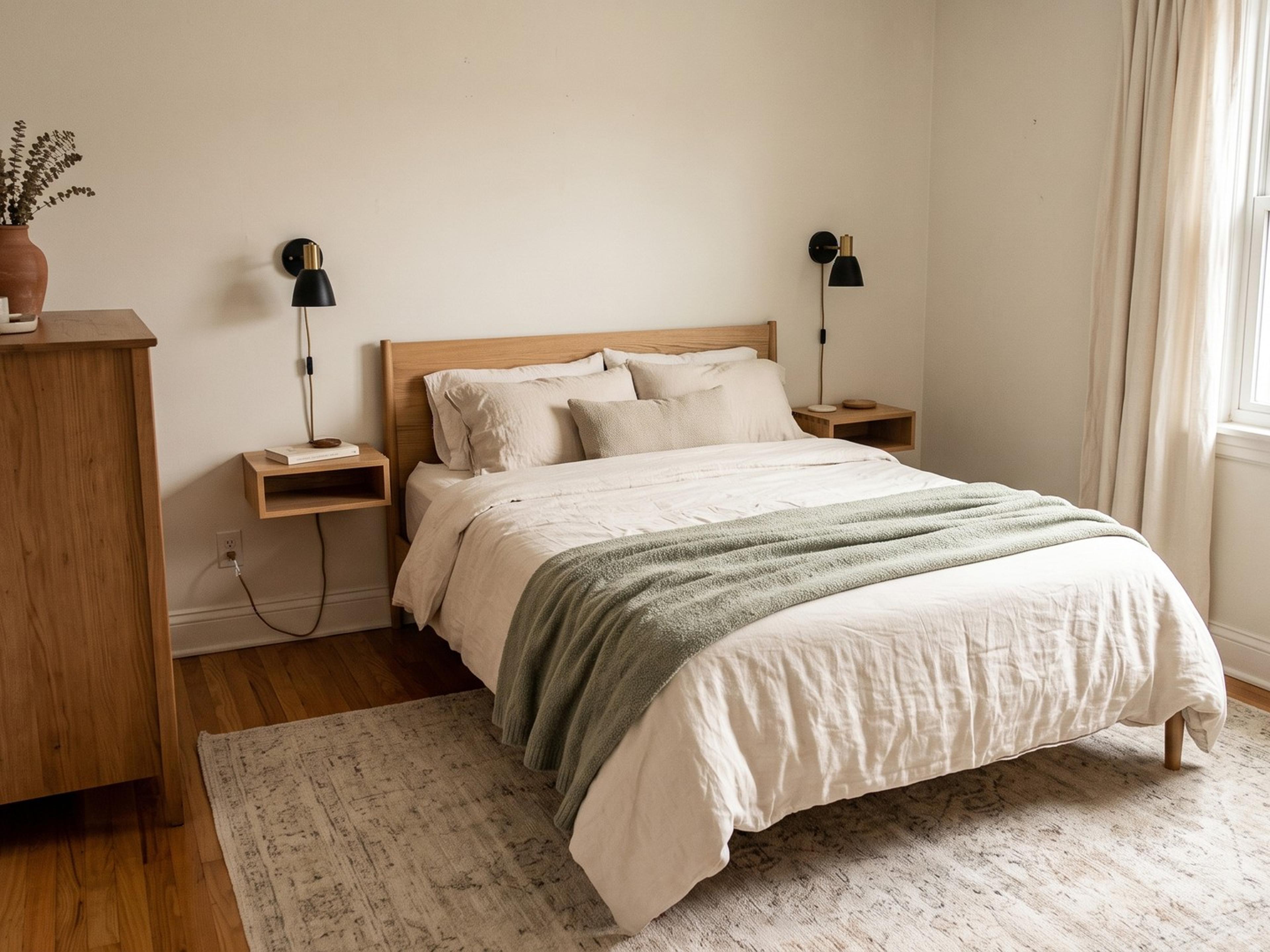
Small Bedroom Layout With a Queen Bed: How to Fit It and Still Move Around
Fit a queen bed in a small bedroom without feeling cramped. Measure smart, plan walkways, pick the right wall and use space-saving storage ideas.
Small Spaces
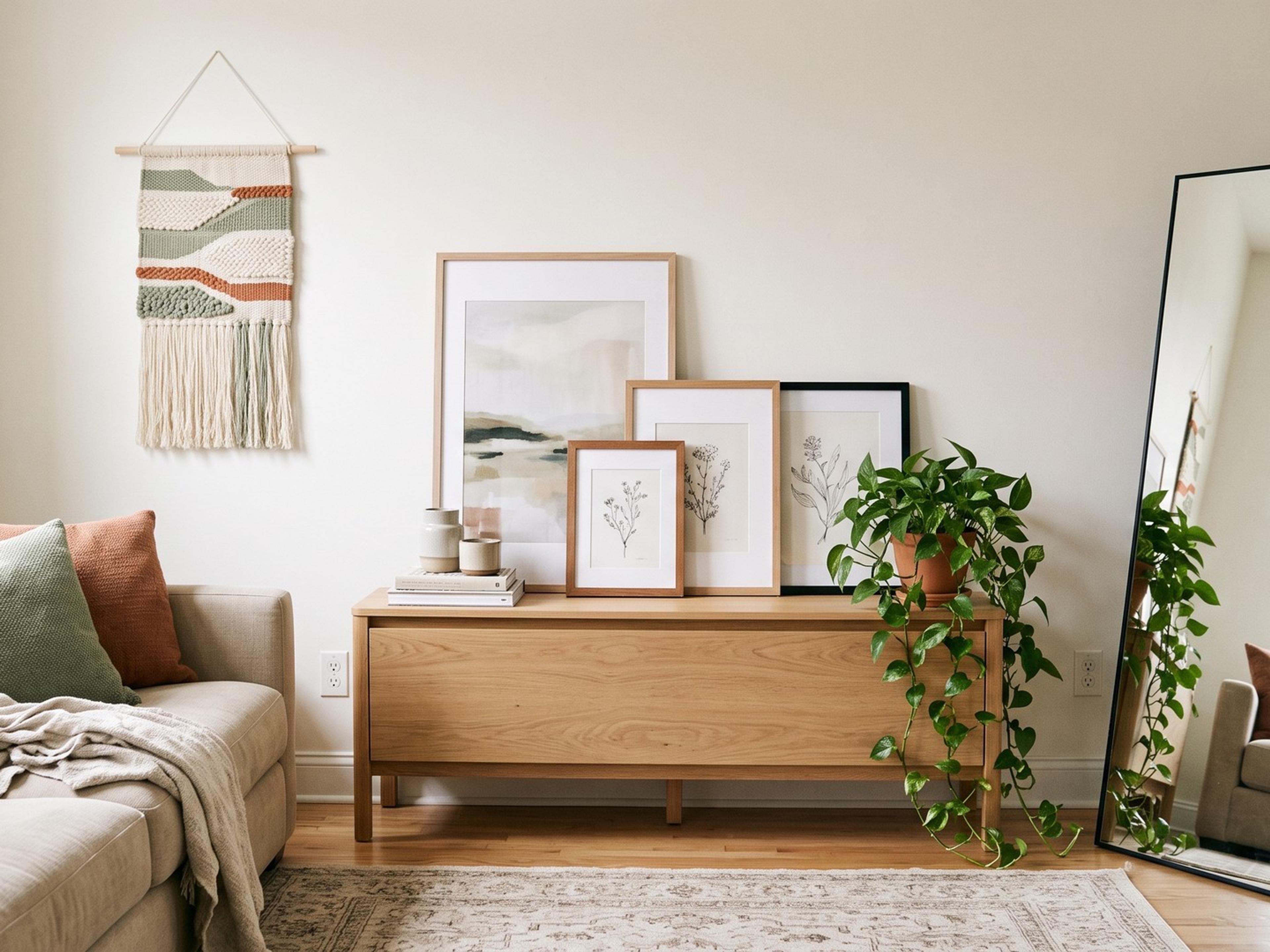
Renter Friendly Wall Decor: How to Decorate Rental Walls Without Damaging Them
Decorate rental walls without losing your deposit. Damage-free ways to hang and lean art, use adhesive strips correctly and plan a layout that looks intentional.
Small Spaces
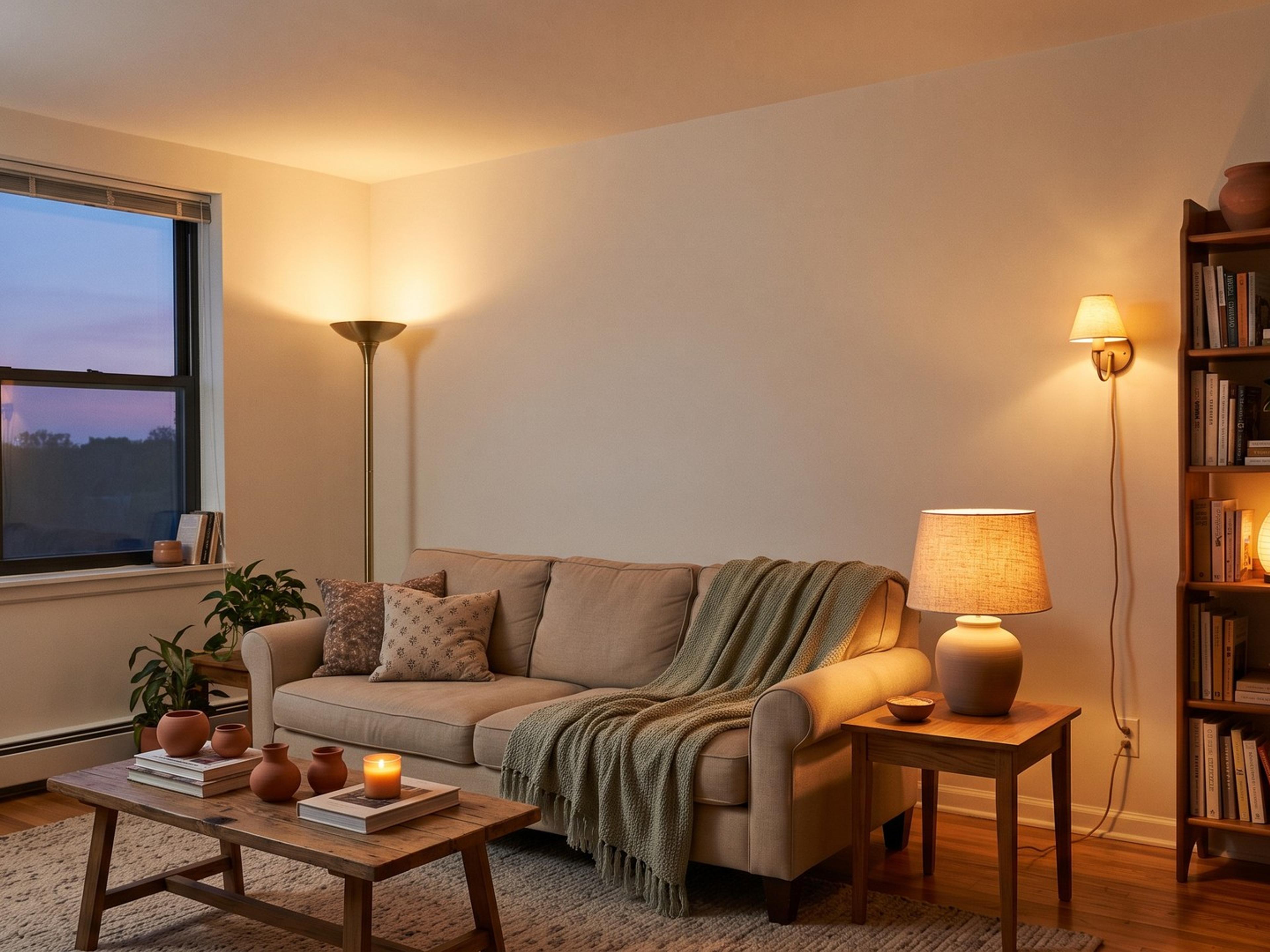
Apartment With No Overhead Lighting? How to Light a Room the Cozy Way
No ceiling light? Light your apartment with a simple lamp plan: find the switched outlet, layer floor and table lamps, add plug-in sconces and choose warm bulbs.