Apartment With No Overhead Lighting? How to Light a Room the Cozy Way
No ceiling light? Light your apartment with a simple lamp plan: find the switched outlet, layer floor and table lamps, add plug-in sconces and choose warm bulbs.
By Shelf & Sill6 min read
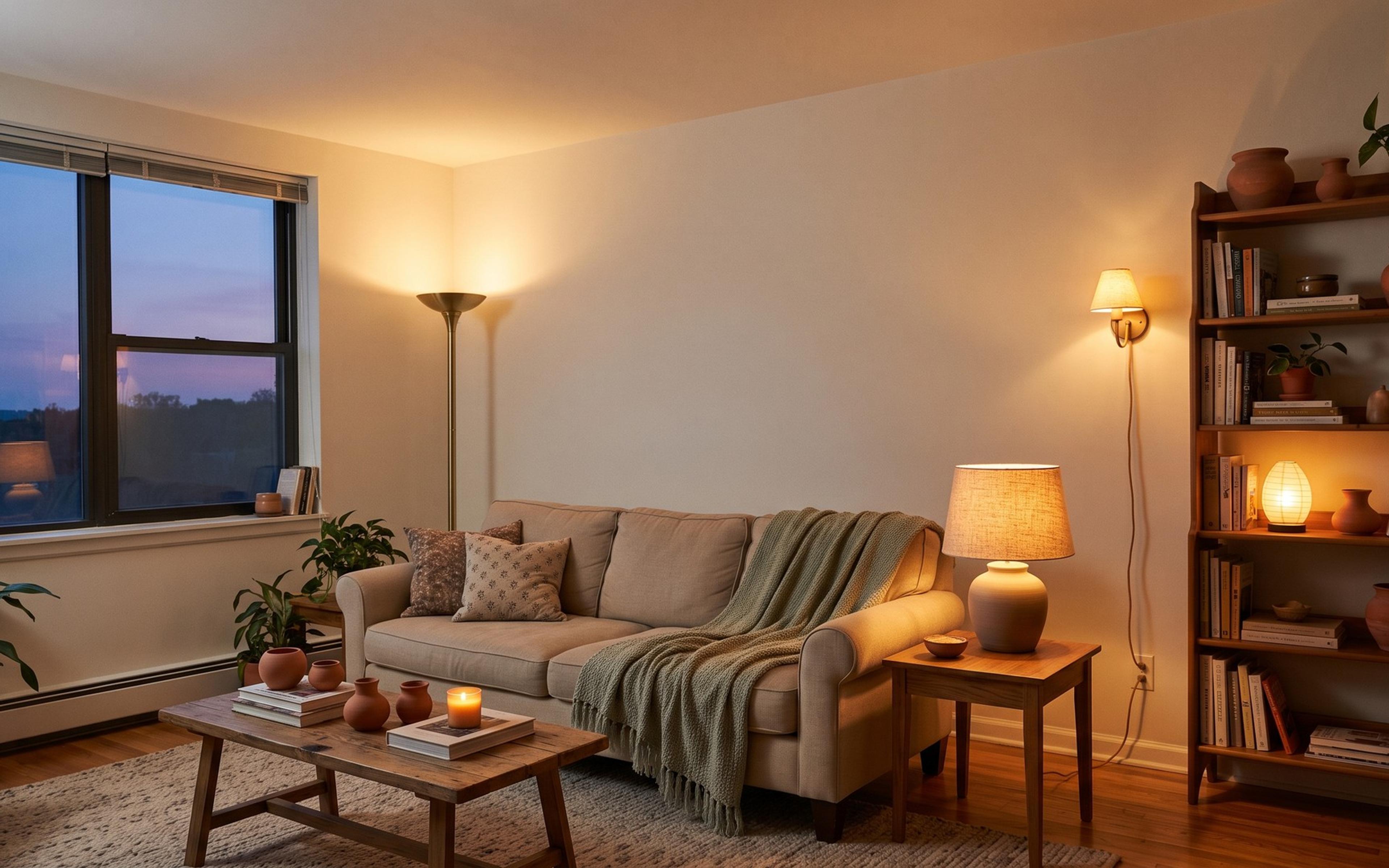
Inspiration image created with AI · products may vary
You flip the switch by the door and... a lamp outlet turns on. Or nothing happens at all. Many apartments, especially older buildings, have living rooms and bedrooms with no ceiling fixture. If you have an apartment with no overhead lighting, the fix is not one giant lamp. It is a few lamps, placed with a plan, that together make the room bright enough for daily life and cozy at night.
Here is a step-by-step plan, with common design guidelines and notes on when each idea may not fit your space.
1. Find Your Switched Outlet and Map the Room
Many rooms without ceiling lights have an outlet controlled by the wall switch instead. Often only the top or bottom half of that outlet is switched, so test each one.
To find it:
- Plug a lamp into each outlet and flip the wall switch
- Note which outlet (and which half) responds
- Sketch the room and mark every outlet, window and doorway
Why it works: A lamp on the switched outlet means you can walk in and turn on light without fumbling in the dark.
When it may not work: If your room has no switched outlet, use a smart plug or a remote-controlled plug so one lamp can be turned on from the doorway.
2. Plan for Three Layers of Light
Designers often talk about three layers:
- Ambient light: General light that fills the room
- Task light: Focused light for reading, working or cooking
- Accent light: Soft light that highlights art, plants or shelves
Without a ceiling fixture, lamps have to cover all three. A common rule of thumb is to aim for light sources at different heights, often low, middle and high, spread around the room rather than clustered in one corner.
When it may not work: In a very small studio, three separate lamps can feel crowded. Look for one lamp that does double duty, such as a floor lamp with a reading arm.
3. Start With an Uplighting Floor Lamp
For ambient light, a floor lamp that points light up toward the ceiling is one of the best substitutes for an overhead fixture. The light bounces off the ceiling and spreads across the room.
Placement tips:
- Put it in a corner or against the darkest wall
- Keep it a little away from the wall so light spreads
- Light ceilings bounce light best; darker ceilings absorb more of it
When it may not work: Very high, dark or wood ceilings reflect less light, so you may need an extra lamp. Low ceilings can create a hot spot directly above the lamp.
4. Add Table Lamps Where You Sit
Table lamps give you warm, eye-level light right where you need it.
- Put one on a side table by the sofa or reading chair
- Use matching pairs on nightstands or a console to create balance
- A common guideline is to have the bottom of the shade around eye level when you are seated, so you see the glow, not the bare bulb
When it may not work: If your side tables are very low or very high, the shade may sit at an awkward height. Adjust with a stack of books or choose a lamp with a different base height.
5. Use Plug-In Sconces and Wall Lights
Plug-in sconces mount to the wall with a few screws and run a cord to the outlet. Rechargeable wall lights skip the cord entirely.
They work well:
- Beside the bed instead of nightstand lamps
- Above a desk or reading nook
- Flanking art or a mirror
When it may not work: Some leases do not allow screw holes, so check yours first. Our renter friendly wall decor guide explains damage-free hanging methods. Rechargeable lights may need charging every few days to weeks, depending on use.
6. Pick the Right Bulbs
The bulb matters as much as the lamp.
- Color temperature: About 2700K to 3000K gives a warm, cozy glow that suits living rooms and bedrooms. Around 3500K to 4000K feels brighter and cooler for kitchens and workspaces.
- Brightness: Bulb brightness is listed in lumens. A bulb of about 800 lumens gives roughly the light of an older 60-watt incandescent bulb, a common starting point for a general-purpose lamp.
- Dimmers: Dimmable bulbs with a plug-in dimmer let one lamp handle both daytime brightness and evening calm.
- Consistency: Use the same color temperature in every lamp in a room so the light looks even.
When it may not work: Not every bulb works with every dimmer. Check that both are labeled as compatible. Also check each lamp's maximum wattage rating and never exceed it.
7. Spread the Light Around the Room
Here is a simple starting plan for a typical living room or bedroom:
- One uplighting floor lamp in the darkest corner
- One or two table lamps by seating or the bed
- One accent light, such as a small lamp on a bookshelf or a battery candle on a shelf
Try to avoid leaving any corner fully dark. A glowing corner makes a room feel larger and more welcoming.
When it may not work: If outlets are only on one wall, running cords everywhere can become a trip hazard. Use flat cord covers along baseboards and keep cords out of walkways.
8. Make It Cozy, Not Just Bright
Once the room is bright enough, think about mood.
- Use warm fabric shades in linen or soft paper to diffuse light
- Add mirrors across from lamps to reflect light deeper into the room
- Include soft accent lights such as string lights or flameless candles for evenings
For more warm, layered ideas, see 5 simple ways to make your living room feel cozy. If your bedroom is tight, our small bedroom layout with queen bed guide shows how sconces can free up nightstand space.
When it may not work: String lights and candles look cozy but are not enough for reading or chores. Keep at least one brighter lamp available.
Common Mistakes to Avoid
- Relying on one lamp. A single light source tends to leave dark corners and harsh shadows.
- Mixing cool and warm bulbs. The room can look patchy and uneven.
- Overloading power strips. Use quality power strips with surge protection, and do not chain them together.
- Running cords under rugs. This can be a fire hazard. Route cords along walls instead.
- Choosing shades that are too dark. Opaque shades push light only up and down, which can make the room feel dimmer.
FAQ
How many lamps do I need in a room with no overhead light?
There is no fixed number. A practical starting point is three light sources, one for each layer (ambient, task and accent), then add more where the room still feels dim.
What is the best lamp for a room with no ceiling light?
An uplighting floor lamp is a popular choice for general light because it bounces light off the ceiling. Pair it with table lamps for task light.
Can I install a ceiling light in a rental?
Only with your landlord's permission, and the work should be done by a licensed electrician. Plug-in options are a renter friendly alternative.
What color bulb is best for a cozy living room?
Warm white bulbs around 2700K to 3000K are a common choice for living rooms and bedrooms.
An apartment with no overhead lighting can actually end up cozier than one with a single harsh ceiling fixture. Plan your layers, choose warm bulbs and light every corner. Come the holidays, our cozy Thanksgiving table ideas add even more glow.
You might also like
Small Spaces
Renter Friendly Wall Decor: How to Decorate Rental Walls Without Damaging Them
Decorate rental walls without losing your deposit. Damage-free ways to hang and lean art, use adhesive strips correctly and plan a layout that looks intentional.
Bedroom
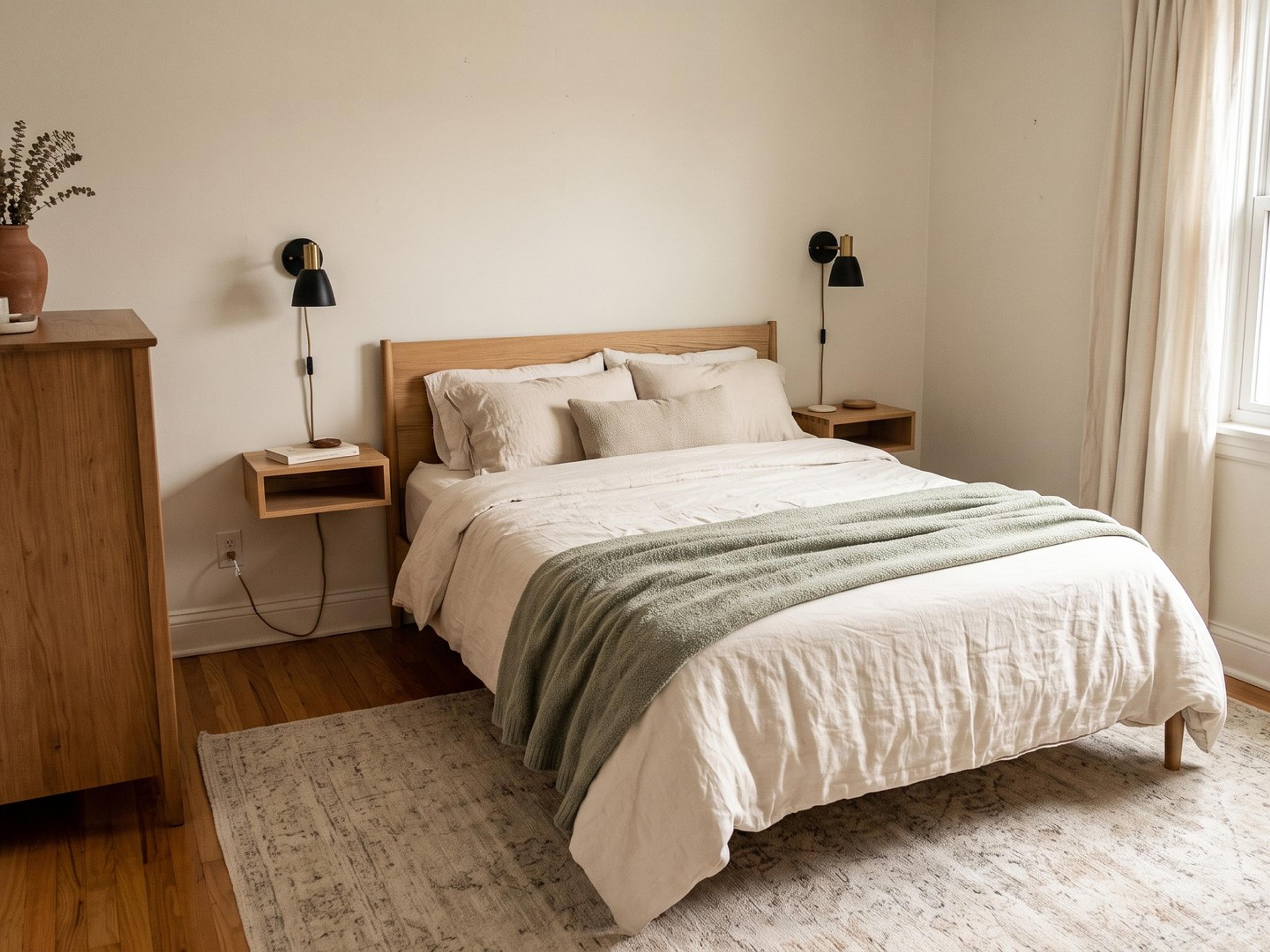
Small Bedroom Layout With a Queen Bed: How to Fit It and Still Move Around
Fit a queen bed in a small bedroom without feeling cramped. Measure smart, plan walkways, pick the right wall and use space-saving storage ideas.

Kitchen & Dining
Cozy Thanksgiving Table Ideas: 5 Simple Ways to Set a Warm, Welcoming Table
Set a warm, welcoming Thanksgiving table without the stress: five simple ideas for texture, candlelight and natural details your guests will love.