Small Bedroom Layout With a Queen Bed: How to Fit It and Still Move Around
Fit a queen bed in a small bedroom without feeling cramped. Measure smart, plan walkways, pick the right wall and use space-saving storage ideas.
By Shelf & Sill7 min read
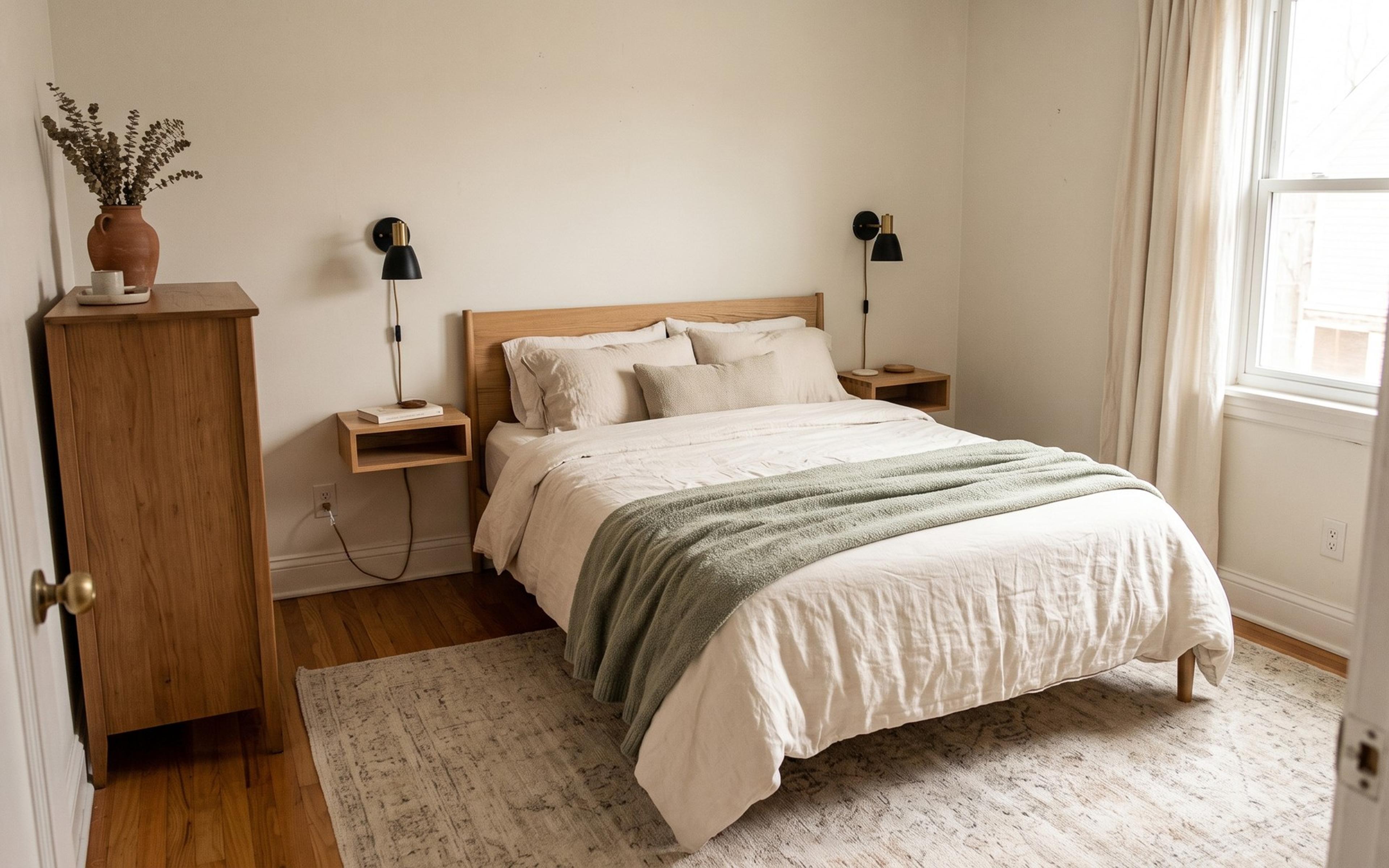
Inspiration image created with AI · products may vary
A queen bed in a small bedroom can feel like parking a car in a closet. You squeeze past the corner, the dresser drawers hit the frame, and there is nowhere to set down a glass of water. The good news: most small rooms can hold a queen and still leave you room to move. It comes down to measuring first, choosing the right wall for the bed, and being picky about everything else.
This guide walks through a simple layout process using common design guidelines. Every room is different, so treat the numbers as starting points, not hard rules.
1. Measure the Room Before You Move Anything
A standard queen mattress is about 60 inches wide and 80 inches long. Your frame, headboard and bedding add more, and footprints vary from frame to frame, so measure the one you actually have.
Before you drag furniture around, sketch the room on paper or graph paper and note:
- Wall lengths and ceiling height
- Door swing (including the closet door)
- Window positions and sill heights
- Radiators, vents and outlets
- Where light switches sit
Why it works: You can test three or four layouts in ten minutes on paper instead of an afternoon of heavy lifting.
When it may not work: Odd angles, sloped ceilings or built-ins make paper plans less reliable. In that case, tape the bed's outline on the floor with painter's tape and walk around it for a day.
2. Plan Your Walkways First
Clearance is what makes a small bedroom feel livable. Common design guidelines suggest:
- About 24 inches of walking space beside the bed as a practical minimum
- About 30 to 36 inches where you can manage it, especially on the side you use most
- About 36 inches in front of a dresser so you can open drawers and stand in front of them
Lay these zones out on your sketch before adding anything else. Whatever space is left over is where storage and decor can go.
When it may not work: In a very narrow room, you may only get comfortable clearance on one side. That is fine if one person sleeps there or both sleepers do not mind entering from the same side.
3. Choose the Right Wall for the Bed
In most small bedrooms, the best headboard wall is the longest unbroken wall that does not face the door directly or block a window. Here are the most common setups.
Centered on a Wall
Centering the bed with a walkway on both sides looks balanced and works well for couples. It needs the most width: the bed plus roughly 24 inches on each side.
Pushed Into a Corner
Placing one long side of the bed against a wall frees up a large open strip of floor. It is a smart move for a single sleeper or a guest room.
When it may not work: Making the bed is harder, and the person on the wall side has to climb out over the foot or the other sleeper.
Under a Window
Sometimes the window wall is the only wall long enough. A bed under a window can look lovely with a low headboard.
When it may not work: Drafts, heat sources, blinds you cannot reach, and a headboard that blocks the sill. Keep cords from blinds safely out of reach, especially in kids' rooms.
4. Pick a Space-Smart Bed Frame
The frame matters as much as the mattress size.
- Choose a slim profile. Frames with thin rails and no footboard save inches at the foot and sides.
- Use the space under the bed. A frame with drawers or enough height for under-bed bins can replace a dresser.
- Skip the bulky headboard. A wall-mounted headboard or a simple painted headboard shape keeps depth to a minimum.
When it may not work: Under-bed drawers need open floor beside the bed to pull out, and drawer depth varies by frame. Check the drawer depth against your walkway before you buy. If your walkway is already tight, choose lift-up storage or simple rolling bins instead.
5. Scale Down the Nightstands (or Float Them)
Full-size nightstands can quietly eat 18 inches or more per side. Try these swaps:
- Narrow nightstands around 12 to 16 inches wide
- Wall-mounted shelves at roughly mattress height, so nothing touches the floor
- A single nightstand on the side you use most
- Wall sconces or clip-on lamps in place of table lamps
A common guideline is to keep the nightstand top within a few inches of the top of your mattress so you can reach it easily.
When it may not work: Floating shelves need secure wall anchors. Renters should check their lease first.
6. Go Vertical With Storage
When floor space is tight, look up.
- Swap a wide, low dresser for a tall, narrow chest of drawers
- Add shelves above the door or above the headboard for books and baskets (secure them well and avoid anything heavy over the bed)
- Use over-the-door hooks for robes and bags
- Hang a full-length mirror on the wall or door instead of using a floor mirror
Why it works: A tall piece uses the same footprint as a nightstand while holding far more.
When it may not work: Tall furniture must be anchored to the wall to prevent tipping. This is a key safety step, especially in homes with children.
7. Use Rugs and Light to Make It Feel Bigger
A rug and good lighting can make a tight room feel calm instead of cramped.
- Rug size: For a queen, a common choice is a rug large enough to extend about 18 to 24 inches past each side of the bed, often an 8-by-10-foot rug in a larger room or a 5-by-8 laid sideways under the lower two-thirds of the bed in a smaller one.
- Runners: In a very small room, two runners alongside the bed can work better than one big rug.
- Light colors: Pale walls and bedding in ivory, warm beige or soft sage reflect more light.
- Layered lighting: A ceiling light alone can feel flat. Add a warm lamp or sconce at the bedside.
When it may not work: A rug that is too small can make the bed look like it is floating. If you cannot go big, skip the rug and use a cozy throw at the foot of the bed instead.
For more ways to add warmth with texture and lighting, see 5 simple ways to make your living room feel cozy. Most of those ideas translate easily to a bedroom.
8. Edit Ruthlessly
The last step is often the most helpful: take things out.
- Move the desk to another room if you can
- Store off-season clothes and extra bedding in labeled bins
- Keep surfaces clear except for a lamp, a book and one small decorative piece
When it may not work: If the bedroom must also be your office or dressing room, editing has limits. In that case, prioritize the walkway on your main side and accept a tighter fit elsewhere.
Common Mistakes to Avoid
- Placing the bed by the door. A bed right beside the door can make the room feel crowded the moment you walk in.
- Blocking the closet. Check that closet doors and drawers fully open.
- Choosing a bulky frame. Thick rails and a tall footboard can steal space you need for walking.
- Forgetting the outlets. Plan nightstand spots near outlets so cords do not stretch across walkways.
- Too many small pieces. Several little tables and baskets can make a room feel cluttered. Fewer, more useful pieces usually look calmer.
FAQ
What is the smallest room that fits a queen bed?
A common rule of thumb is a room of about 10 by 10 feet for a queen with modest walkways, though some people make it work in smaller rooms with one side against a wall. Always measure your specific room and frame.
Should a queen bed go against a wall in a small room?
It can. Pushing the bed into a corner frees up floor space, but it is less convenient for two people. A centered bed feels more balanced if you have the width.
How much space should be at the foot of the bed?
A common guideline is about 24 inches as a minimum walkway past the foot of the bed, and closer to 36 inches if a dresser sits on that wall so you can open the drawers and still get by.
Can I fit a dresser in a small bedroom with a queen bed?
Often, yes, if you choose a tall, narrow dresser and leave enough room to open the drawers. If not, under-bed storage and closet organizers can replace it.
A small bedroom with a queen bed can still feel open and restful. Measure first, protect your walkways and let every piece earn its place.
You might also like
Kitchen & Dining
Cozy Thanksgiving Table Ideas: 5 Simple Ways to Set a Warm, Welcoming Table
Set a warm, welcoming Thanksgiving table without the stress: five simple ideas for texture, candlelight and natural details your guests will love.
Seasonal Decor
5 Chic & Cozy Halloween Decor Finds on Amazon (Budget-Friendly)
Elevate your home for spooky season with these 5 warm, tasteful, and budget-friendly Halloween decor finds from Amazon.
Living Room
5 Simple Ways to Make Your Living Room Feel Cozy
Transform your living room into a warm, inviting sanctuary with these 5 simple styling tricks and cozy accent pieces.