How to Separate a Bed From the Living Area in a Studio: 10 Easy Ideas
How to separate a bed from the living area in a studio: open bookcases, curtains, screens, a turned sofa, rugs, zoned lighting and smart layout.
By Shelf & Sill6 min read
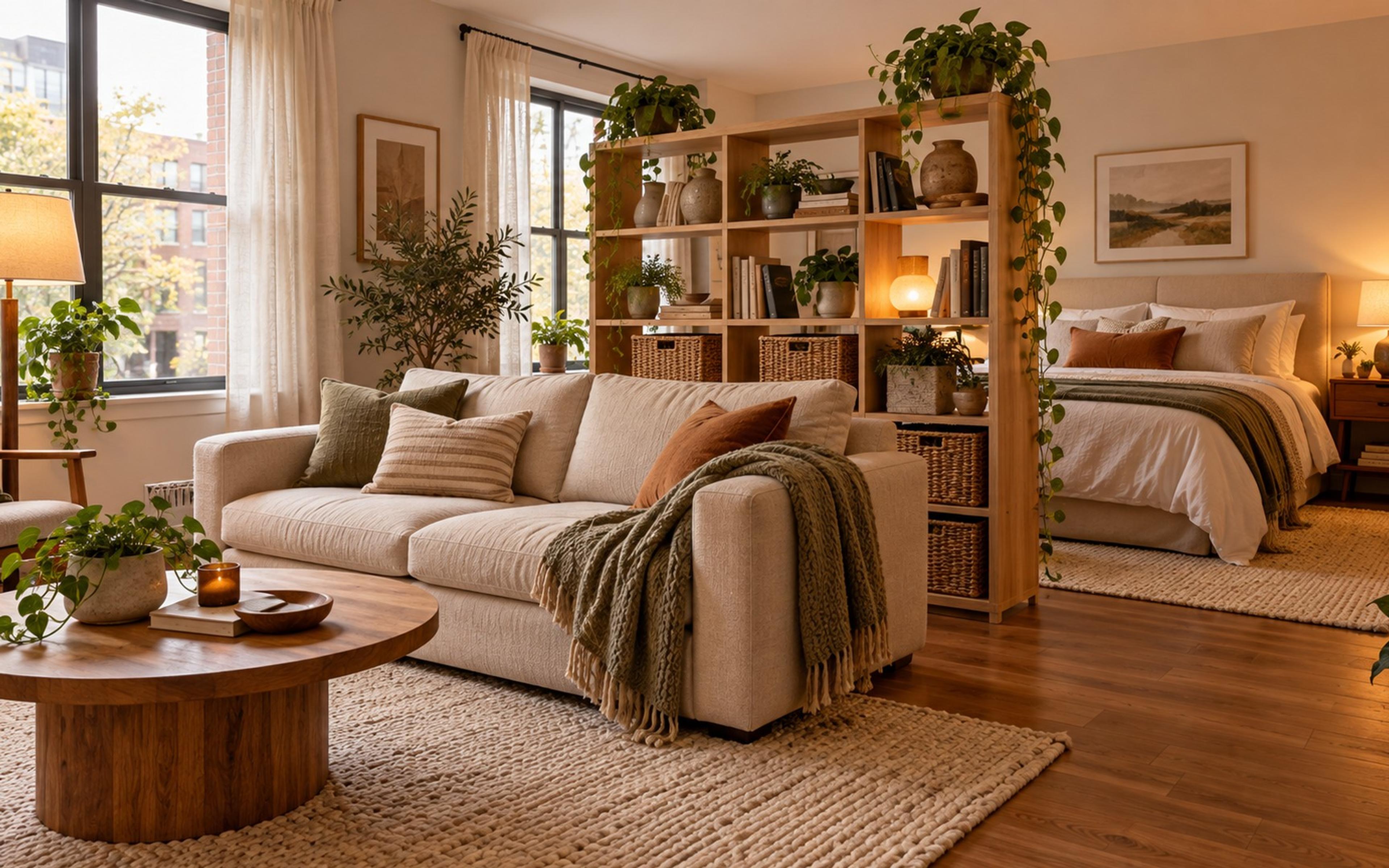
Styled inspiration · products may vary
In a studio apartment, your bed is in your living room. That can make it hard to relax, hard to host and hard to feel like you are ever "off" for the day. Learning how to separate a bed from the living area in a studio makes the whole home feel larger and calmer, and most of the best ways need no walls, no drilling and no renovation.
This guide walks through dividers, layouts and visual tricks, with notes on what each one does well and when it may not suit your space.
Start With the Layout
What: Decide where the bed and living zones will go before you buy any divider.
Why it works: The bed usually works best in the corner farthest from the front door, so you don't walk past it to get in. The living area sits closer to the door and windows.
When it may not work: Window, radiator and outlet positions may force a different layout. If the only good wall for the bed is near the door, use stronger visual separation.
Sketch first
Draw the room on paper, mark the door, windows and outlets, and test two or three layouts. Our small bedroom layout with a queen bed guide covers measuring and walkway clearances that apply to studios too.
1. Use an Open Bookcase as a Divider
What: Place an open-backed bookcase or cube shelf perpendicular to the wall, between the bed and the living area.
Why it works: It separates the zones while letting light through, and it adds storage on both sides.
When it may not work: Tall bookcases can tip, especially when they stand away from a wall. Anchor them to the wall or floor where possible and keep heavy items low. The CPSC recommends anchoring furniture with shelves; follow the anti-tip kit's instructions. Lower shelves are safer as freestanding dividers.
2. Hang a Curtain
What: Mount a ceiling track or tension rod and hang curtains around the bed area.
Why it works: Curtains create a soft, cozy separation you can open in the day and close at night. Linen or sheer fabric in warm neutrals keeps it light.
When it may not work: Ceiling tracks usually need screws. Renters can try floor-to-ceiling tension poles with a rod (check the pole's weight rating and ceiling type), or ask permission. Heavy curtains can block light from the windows.
3. Use a Folding Screen
What: Place a folding screen at the foot or side of the bed.
Why it works: Screens are freestanding, easy to move and come in woven, wood or fabric styles that suit a cozy space.
When it may not work: Screens are not very stable and can be knocked over. Place them where they won't be bumped often, away from doors and walkways.
4. Turn the Sofa Into a Divider
What: Place the sofa with its back facing the bed.
Why it works: The sofa back creates a clear boundary, and the living area faces away from the bed, so you don't look at it while relaxing.
When it may not work: A sofa back can look bulky. Put a slim console table or low shelf behind it to soften the view and add storage.
5. Define Zones With Rugs
What: Use separate rugs for the sleeping area and the living area.
Why it works: Rugs create visual "rooms" without any furniture. Different textures or sizes help each zone feel distinct.
When it may not work: Too many rugs in a small studio can look choppy. Keep them in the same color family. For sizing under the bed, see our guide on rug size under a bed.
6. Use Lighting to Create Two Moods
What: Give each zone its own light: a reading lamp or wall light by the bed and a floor or table lamp in the living area.
Why it works: Turning off the bedside light at night and leaving the living lamp on visually "closes" the bedroom.
When it may not work: Too many lamps can clutter a small space. Plug-in wall lights save surface space.
7. Raise the Bed or Lower the Living Area
What: Use a loft bed, a platform or a daybed.
Why it works: A loft bed frees floor space underneath; a platform creates a defined sleeping zone; a daybed doubles as a sofa.
When it may not work: Loft beds need high ceilings and can feel cramped. Daybeds mean you sleep on your sofa, which some people find less restful.
8. Style the Bed Like Furniture
What: Make the bed look tidy and sofa-like with a neutral coverlet, a few pillows and a throw.
Why it works: A neatly made bed in calm colors doesn't feel like a bedroom intruding on the living space.
When it may not work: Busy patterned bedding draws the eye. Keep it simple and tonal.
9. Use Plants as a Soft Divider
What: Group tall plants or a planter shelf between zones.
Why it works: Plants divide the space softly and bring life to the room.
When it may not work: Plants need light and care. In a dark studio, quality faux plants or a plant stand near the window may be easier.
10. Keep Sightlines Clear
What: Keep dividers low or open near windows.
Why it works: Daylight needs to reach both zones. Solid, tall dividers can make a studio feel dark and cramped.
When it may not work: If privacy matters more than light, use a curtain you can open during the day.
Plan Storage So Clutter Doesn't Cross Zones
What: Give each zone its own storage: a nightstand or under-bed bins for the sleep side, a media console or baskets for the living side.
Why it works: When clothes and laundry stay on the bed side and remotes and books stay on the living side, the boundary holds up day to day.
When it may not work: Small studios may only fit one big storage piece. Let a divider bookcase serve both sides, with closed bins facing the bed.
Choosing the Right Divider for You
- Want storage? Open bookcase or cube shelf
- Want flexibility? Curtain or folding screen
- Short on space? Rugs and lighting
- Want privacy? Curtain or a combination of sofa plus screen
Keep It Cozy and Cohesive
- Use one warm neutral palette across both zones.
- Repeat wood tones and textiles.
- Edit clutter so both areas feel calm.
Common Mistakes to Avoid
- Putting the bed right by the front door
- Blocking windows with tall dividers
- Using unanchored tall shelves as dividers
- Too many rugs that don't relate
- Bright, busy bedding that dominates the room
FAQ
How do I hide my bed in a studio apartment?
Use a curtain, a folding screen or an open bookcase, or turn the sofa so its back faces the bed.
What is the cheapest way to divide a studio?
Rearranging furniture and using rugs and lighting to define zones costs little or nothing.
Should the bed face the door in a studio?
It usually feels better when the bed is away from the door and out of the direct line of sight.
Can you hang a studio curtain divider without drilling?
Floor-to-ceiling tension poles with a rod can work in some spaces. Check the product instructions.
A studio can feel like two rooms with a few smart moves. Plan the layout, add a soft divider and give each zone its own light, and your bed will finally feel like its own retreat. For more cozy living area ideas, see 5 simple ways to make your living room feel cozy.
You might also like
Small Spaces
Rental Kitchen Makeover: 12 Ways to Update Without Renovating
A rental kitchen makeover without renovating: new hardware, removable backsplash, plug-in lights, freestanding storage, textiles and calm counters.
Small Spaces
Dark Apartment Ideas: 11 Ways to Make the Most of Little Daylight
Dark apartment ideas that make the most of little daylight: clear windows, sheer curtains, mirrors, light-reflecting paint, rugs and airy furniture.

Small Spaces
How to Cover Carpet in a Rental: 9 Deposit-Friendly Ideas
Learn how to cover carpet in a rental with large rugs, carpet-safe grippers, layering, floor tiles, chair mats and smart furniture placement.