What to Put Above Your Bed: Cozy Ideas That Are Safe to Hang
Not sure what to put above your bed? Try cozy art, textiles, ledges and wall lights, with sizing tips, safety basics and renter-friendly options.
By Shelf & Sill6 min read
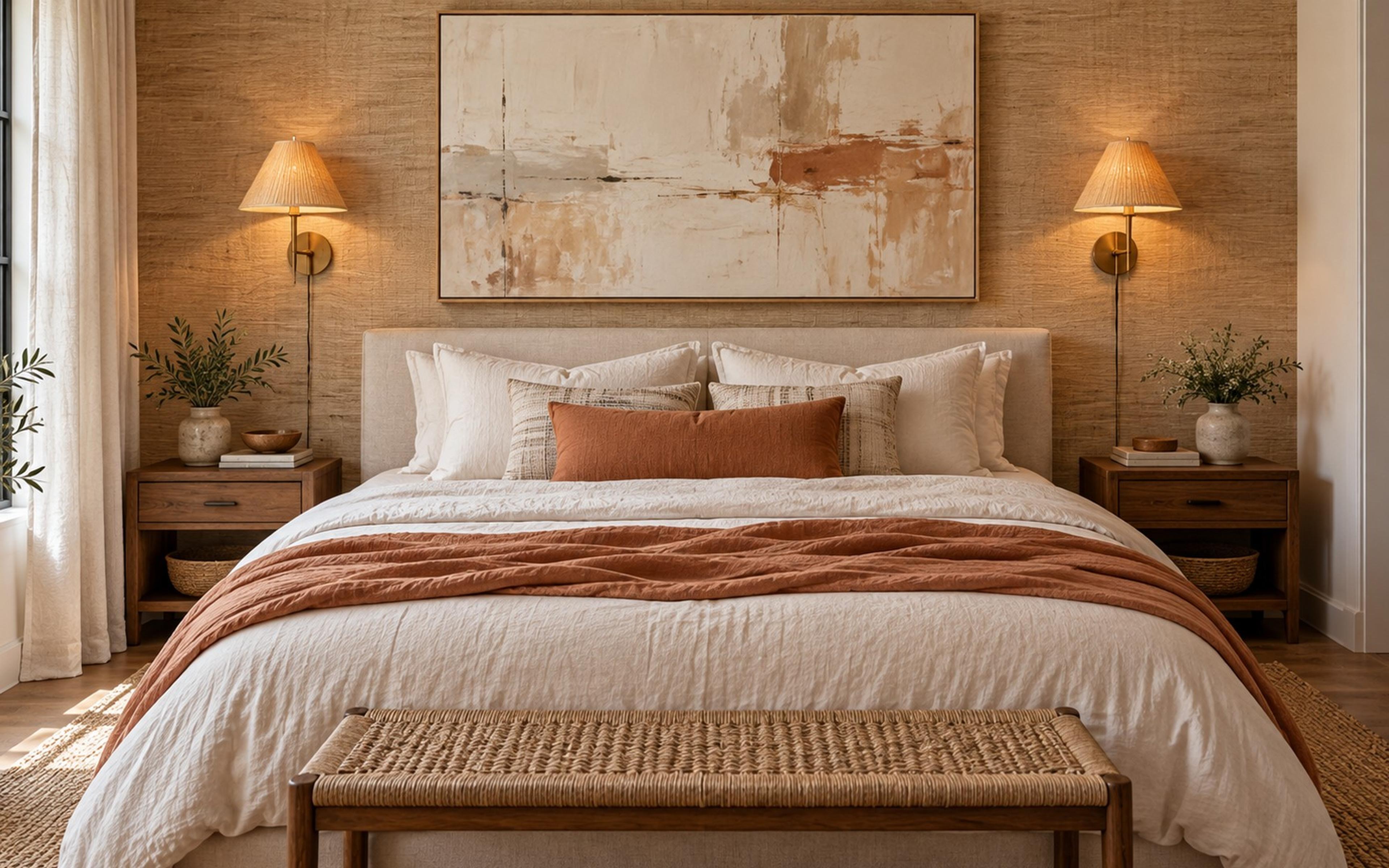
Styled inspiration · products may vary
That blank wall above the headboard is one of the most noticed spots in a bedroom, and one of the most confusing to style. Art? A shelf? Nothing at all? If you have been wondering what to put above a bed, the right answer depends on your wall size, your headboard, whether you rent, and how safe the piece will be hanging over your head while you sleep.
This guide covers simple, cozy ideas, how to size and hang them, and the safety basics that matter more here than anywhere else in your home.
Start With Safety: The Over-the-Bed Rule
What: Anything above a bed should be light, securely mounted and unlikely to fall.
Why it works: You sleep right under it. Earthquakes, slammed doors, kids jumping on the bed or a loose nail can bring a frame down. A light, well-secured piece keeps the wall pretty without the worry.
When it may not work: Some heavy pieces, like large mirrors or framed glass art, can look stunning. If you love one, use hangers or wall anchors rated for the piece's weight (check the package), consider securing the bottom edge too, and choose acrylic glazing instead of glass where possible.
A few safety basics:
- Find studs or use wall anchors rated for the piece's weight, and follow the weight rating on the package.
- Use two hanging points instead of one so frames stay level and secure.
- Skip glass and heavy frames over the bed in earthquake-prone areas.
- Avoid open shelves holding loose items directly above pillows.
1. One Large Piece of Art
What: A single canvas, print or textile centered over the bed.
Why it works: One big piece looks calm and intentional, and it is the easiest option to hang well. Soft landscapes, abstract neutrals and botanical prints suit a warm, cozy room.
When it may not work: A large framed piece can be heavy. Choose a lightweight canvas or an acrylic-front frame. If your headboard is tall, there may not be enough wall for a big piece.
How big and how high?
A common design guideline is to choose art roughly two-thirds the width of the bed or headboard, and to leave a gap of several inches between the top of the headboard and the bottom of the frame (often cited as about 6 to 12 inches). Treat these as starting points and adjust by eye.
2. A Pair or Trio of Prints
What: Two or three matching frames hung side by side.
Why it works: Smaller frames are lighter and easier to hang securely, and a set looks tailored. They are also easier to find than one oversized piece.
When it may not work: Uneven spacing ruins the look. Lay frames out on the floor, then trace them onto paper and tape the paper to the wall before drilling.
3. A Textile or Woven Hanging
What: A tapestry, quilt, woven wall hanging or a piece of linen hung from a wood dowel.
Why it works: Textiles are soft, very light and add warmth, which suits a cozy bedroom. They are also safer over a bed than framed glass.
When it may not work: Very large tapestries can look heavy in a small room, and they collect dust. Shake or vacuum them now and then.
4. A Mirror (With Care)
What: A round or arched mirror above the headboard.
Why it works: It bounces light around and can make a small bedroom feel bigger.
When it may not work: Mirrors are heavy and breakable. Some people also don't like seeing their reflection from bed. If you choose one, pick a lighter frame, mount it securely to studs or rated anchors, and avoid this in earthquake areas.
5. A Picture Ledge
What: A narrow ledge holding a few lean-against-the-wall frames.
Why it works: You can swap art seasonally without new holes.
When it may not work: Leaning frames can slide off when someone bumps the headboard. Choose a ledge with a lip, keep frames light and use small removable putty to hold them in place.
6. Plug-In Sconces or Wall Lights
What: A pair of wall lights on either side of the bed, with or without art in between.
Why it works: They frame the bed, free up nightstand space and add warm reading light.
When it may not work: Cords need a plan. Use cord covers painted to match the wall. Make sure the lights are installed safely and that bulbs stay clear of pillows and fabric.
7. Wallpaper, Paint or a Painted Arch
What: A painted arch, a color-block panel or a peel-and-stick wallpaper accent behind the bed.
Why it works: It adds color with nothing hanging over your head at all, which makes it one of the safest choices.
When it may not work: Renters may need approval for paint. Peel-and-stick can sometimes lift paint when removed; test a small patch first.
Renter-Friendly Options
If you can't make holes, or only want a few small ones:
- Removable adhesive strips and hooks for light frames, within the weight limits on the package, on smooth walls (not heavily textured ones).
- A lightweight canvas leaned on a ledge or on a tall headboard.
- A textile hung from a lightweight dowel with removable hooks.
- Peel-and-stick wallpaper tested in a small area first.
When it may not work: Adhesives can fail in humid rooms or on textured walls, and they may pull paint. Never use them for anything heavy over the bed. If you also want to darken the room without holes, see our guide to blackout curtains without drilling.
When to Leave It Blank
What: A statement headboard or a window behind the bed may be enough.
Why it works: A tall upholstered headboard is already a focal point, and a window wall needs no extra decor. Blank space can also feel restful.
When it may not work: If the room feels unfinished, add a small pair of sconces rather than large art. If your bed sits under a window, see our guide on putting a bed under a window.
Matching the Piece to the Room
- Keep the palette calm. Warm neutrals, soft greens and earthy tones suit sleep.
- Echo bedding colors so the wall and bed feel connected.
- Mind the ceiling height. Low ceilings call for wider, shorter pieces.
- Plan with the layout. If you are rearranging, settle the bed wall first with our small bedroom layout with a queen bed guide.
- Think about the view from bed. You will see the opposite wall more than the one behind you, so don't forget it.
Common Mistakes to Avoid
- Art that is far too small for the bed
- Hanging pieces too high above the headboard
- Heavy glass frames on a single nail
- Open shelves full of loose objects over the pillows
- Adhesive strips used beyond their weight limit
FAQ
What is the best thing to put above a bed?
For most rooms, a single lightweight piece of art or a soft textile is the simplest and safest choice. Pairs of prints and wall lights also work well.
How high should art be above a headboard?
A common guideline is about 6 to 12 inches above the headboard, close enough that the art and bed feel connected. Adjust by eye.
Is it safe to hang a shelf above a bed?
It can be if it is securely anchored and holds only light, secured items. Many people avoid it to be safe.
What can I put above my bed without drilling?
Light frames on removable adhesive strips within their weight limits, a canvas leaned on a ledge or headboard, or peel-and-stick wallpaper.
The space above your bed doesn't need to be complicated. Choose something light, soft and well secured, size it to your bed, and let the wall add warmth to the coziest room in your home. For more cozy styling ideas, see 5 simple ways to make your living room feel cozy.
You might also like
Bedroom
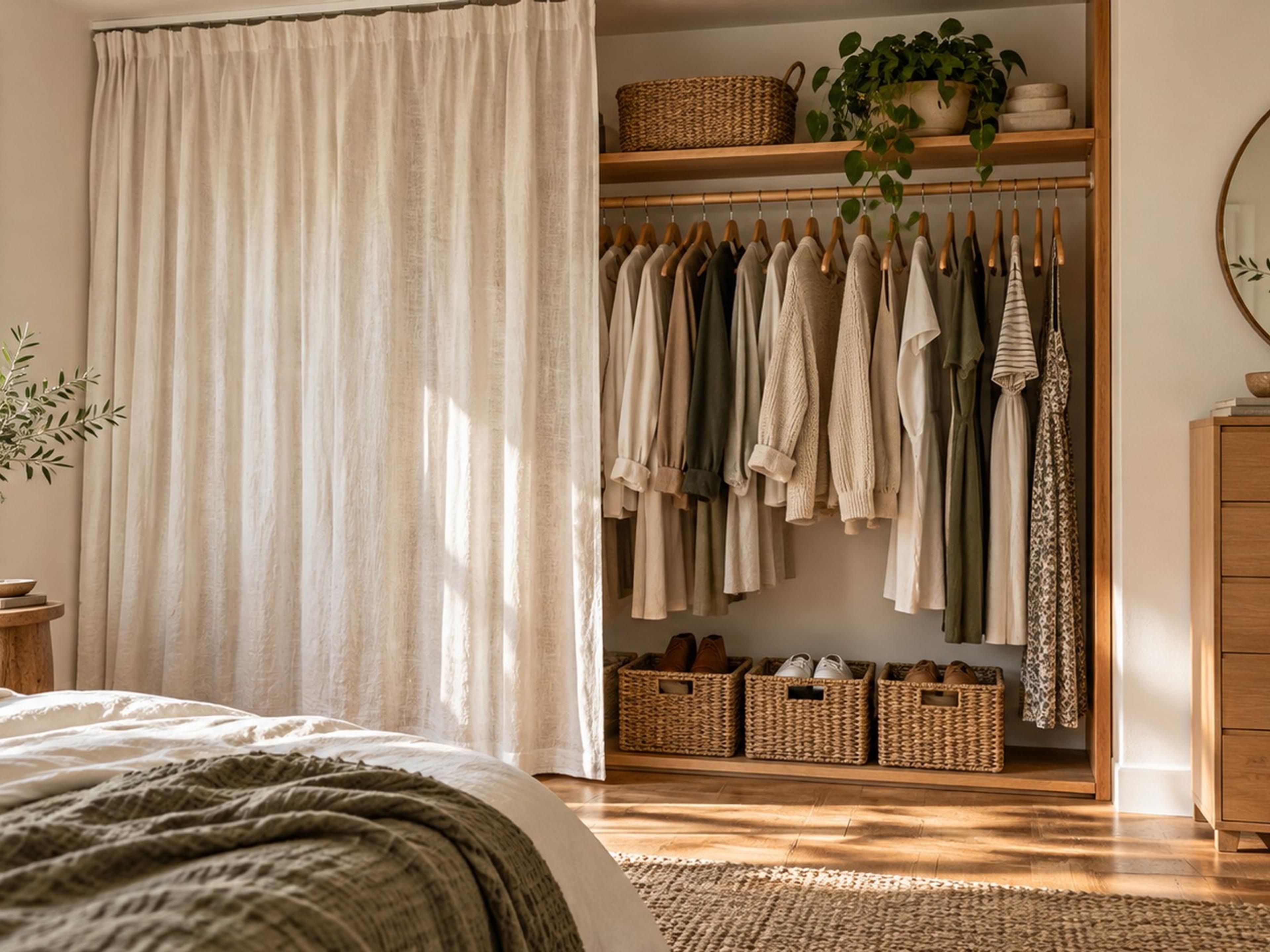
Bedroom With No Closet? Storage and Clothing Solutions That Work
Living in a bedroom with no closet? Smart storage and clothing solutions: wardrobes, racks, curtained nooks, under-bed bins and a tidy closet zone.
Bedroom
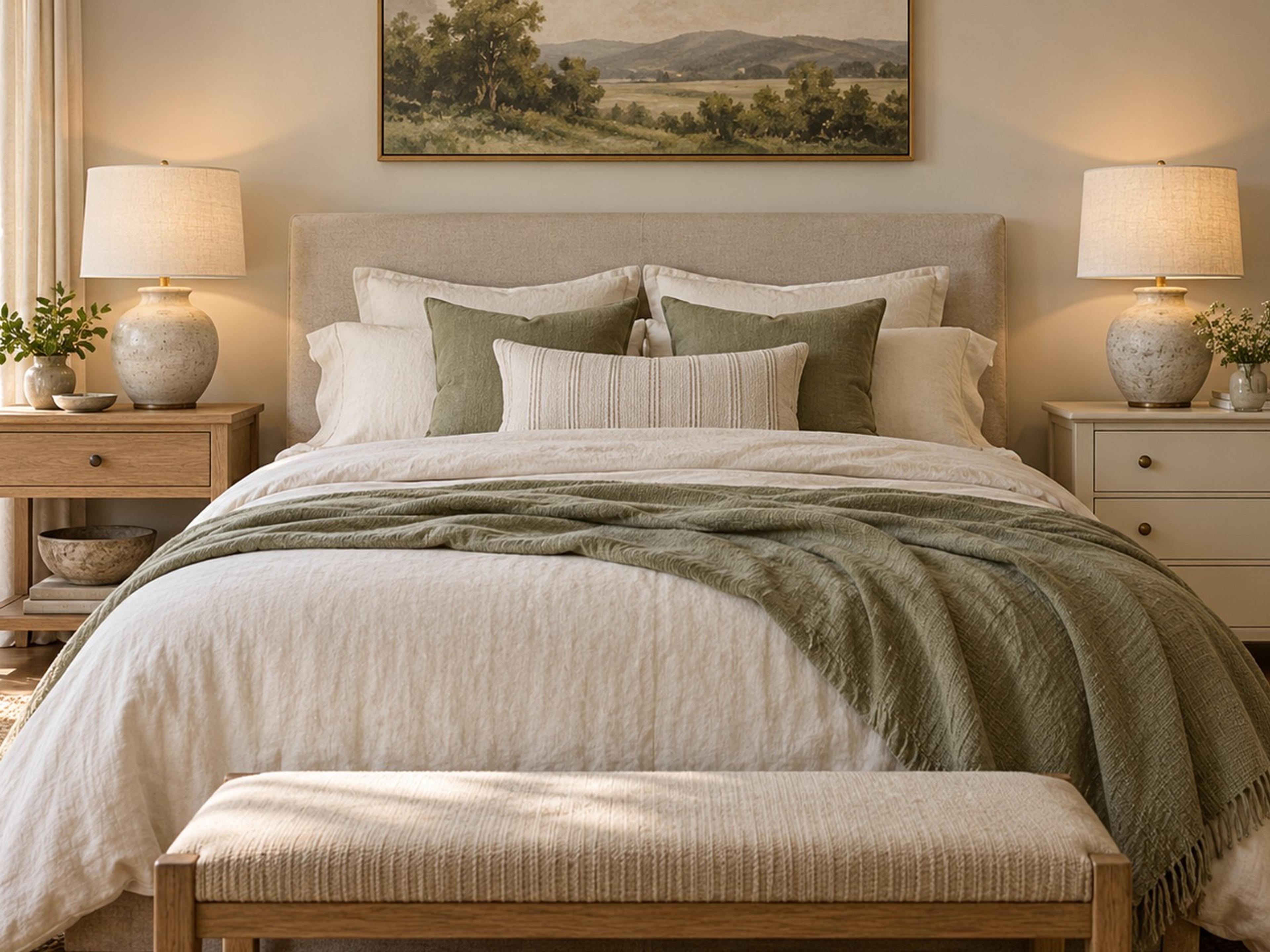
Nightstand Height: How Tall It Should Be (and Fixes for a Mismatched Pair)
Find the right nightstand height for your bed, how to measure, how bed types change it, and easy fixes to make a mismatched pair look intentional.

Bedroom
How to Make a Bedroom Look Finished: 13 Simple Finishing Touches
Bedroom still feels half done? Learn how to make a bedroom look finished with layered light, curtains, texture, scale and personal touches.